

Over 85 percent of American civil lawsuits rely on process service to uphold basic rights in court. Every step in this process ensures that defendants are given their fair chance to respond to legal claims, making it one of the most vital protections in the justice system. By understanding the core principles behind process service, you gain insight into how American courts safeguard due process and prevent costly errors that could jeopardize a case.
Looking for “civil process dispatch”? If you got a call, voicemail or text from someone calling themselves “dispatch,” read What Is “Civil Process Dispatch”? How to Tell if a Call About Court Papers Is Real.
Table of Contents
- Civil Process Service: Definition And Core Principles
- Types Of Civil Process Served In The U.S.
- Key Steps In The Process Serving Workflow
- Legal Standards And Compliance Requirements
- Roles, Risks, And Mistakes To Avoid
Key Takeaways
| Point | Details |
|---|---|
| Civil Process Service Definition | It is a legal mechanism that formally notifies defendants of legal proceedings, ensuring their right to respond. |
| Types of Civil Process | Major methods include personal service, substituted service, mail service, service by publication, and electronic service, each having specific requirements. |
| Process Serving Workflow | The workflow includes document preparation, location verification, delivery execution, and proof of service, ensuring compliance with legal protocols. |
| Roles and Risks in Process Serving | Process servers must perform their duties accurately, as mistakes can lead to legal complications and jeopardize cases. |
Civil Process Service: Definition and Core Principles
Civil process service represents a fundamental legal mechanism ensuring constitutional due process by formally notifying defendants about legal proceedings. Service of process is the critical procedure through which plaintiffs communicate legal actions to opposing parties, guaranteeing their right to respond and participate in judicial proceedings.
At its core, civil process service involves the official delivery of legal documents that inform an individual or entity about a lawsuit filed against them. This procedural step is not merely a bureaucratic requirement but a constitutional safeguard that protects defendants’ fundamental legal rights. The primary objective is to provide proper legal notification, enabling the served party to understand the nature of the legal action, prepare a defense, and exercise their right to be heard in court.
The mechanics of process service involve several key principles. First, documents must be delivered by an authorized process server who is legally qualified to handle such communications. Second, the service must be conducted in a manner that provides verifiable proof of delivery, typically through signed acknowledgments or official documentation. Third, the process must adhere to strict jurisdictional rules, ensuring that legal compliance standards are met throughout the notification process. These principles guarantee that the defendant receives accurate, timely information about pending legal actions, maintaining the integrity of the judicial system.
Ultimately, civil process service bridges the gap between legal paperwork and actual judicial engagement. It transforms abstract legal proceedings into tangible, actionable notifications that respect individual rights while maintaining the structured framework of the legal system. By ensuring transparent, standardized communication, process service protects both plaintiffs seeking justice and defendants seeking fair representation.
Types of Civil Process Served in the U.S.
Civil process service encompasses multiple strategic methods of legal notification, each designed to address unique circumstances and ensure defendants receive critical legal documents. Service of process requirements vary significantly across jurisdictions, reflecting the complex legal landscape of document delivery in the United States.
The primary types of civil process service include personal service, which involves directly handing legal documents to the defendant. This method is considered the most reliable and preferred approach, as it provides immediate, verifiable notification. Another common method is substituted service, where documents are delivered to an authorized representative at the defendant’s residence or workplace when direct personal service is not possible. Mail service represents a third approach, where legal documents are sent via certified or registered mail, requiring a signed receipt as proof of delivery.

Additional specialized service methods address challenging notification scenarios. Service by publication becomes critical when a defendant cannot be located through traditional means, requiring legal notices to be published in local newspapers or official publications. Electronic service has emerged as a modern alternative, particularly useful in cases involving digital communication. Types of process serving continue to evolve, reflecting technological advancements and changing legal communication standards.
Understanding these diverse service methods is crucial for legal professionals and individuals involved in civil proceedings. Each method carries specific legal implications and requirements, ensuring that defendants are appropriately notified while maintaining the integrity of judicial processes. The goal remains consistent: provide clear, verifiable communication that upholds constitutional rights and facilitates fair legal engagement.
Key Steps in the Process Serving Workflow
The process serving workflow represents a systematic approach to legal document delivery, requiring precision, documentation, and strict adherence to legal protocols. Service of process documentation demands meticulous attention to detail, with specific forms and procedures governing each stage of legal notification.
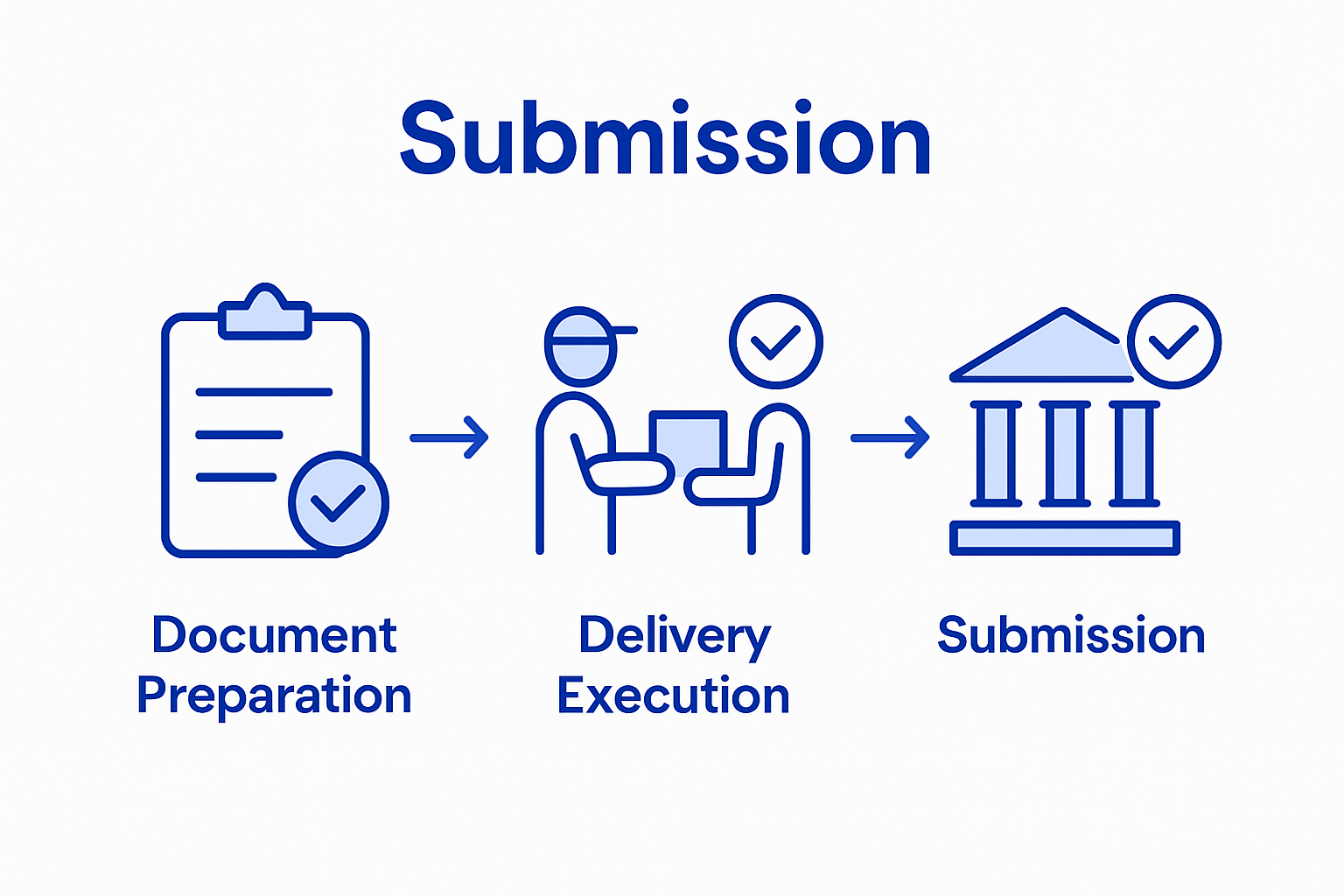
The initial step involves document preparation, which requires collecting and organizing all necessary legal papers, including summons, complaints, and other relevant court documents. Process servers must verify the accuracy of recipient information, ensuring the documents can be delivered to the correct individual or entity. The second critical phase is location verification, where servers conduct thorough research to confirm the exact address and potential alternate delivery locations for the intended recipient.
Delivery execution represents the most crucial stage of the workflow. Process servers must carefully document each interaction, capturing precise details about the time, date, and method of service. Legal process serving guidelines emphasize the importance of maintaining professional conduct and following jurisdiction-specific regulations. After successful delivery, servers complete comprehensive proof of service documentation, which includes sworn statements detailing the exact circumstances of document notification.
The final stage involves formal submission of service documentation to the requesting legal entity, ensuring a complete and verifiable record of the process serving activity. This systematic approach guarantees that legal notifications are executed with maximum efficiency, transparency, and legal compliance, protecting the rights of all parties involved in judicial proceedings.
Legal Standards and Compliance Requirements
Legal standards for civil process service are complex and meticulously defined, establishing a comprehensive framework that ensures fairness and due process. Process serving regulations specify precise requirements for document delivery, mandating that legal notifications must be executed by authorized personnel within specific jurisdictional boundaries.
The compliance landscape involves multiple critical components. First, process servers must demonstrate professional certification and undergo rigorous background checks to ensure integrity and reliability. Jurisdictional requirements vary significantly, with each state maintaining unique protocols for legal document delivery. Process server compliance guidelines emphasize the importance of understanding local and federal regulations that govern legal notifications.
Key compliance standards include maintaining detailed documentation, preserving chain of custody for legal documents, and providing verifiable proof of service. Process servers must adhere to strict ethical guidelines, including respecting individual privacy, avoiding harassment, and ensuring accurate recipient identification. The legal system demands transparency, requiring servers to submit comprehensive reports that document the exact circumstances of document delivery, including time, location, and method of service.
Ultimately, compliance in civil process service is about protecting fundamental legal rights. By establishing rigorous standards, the judicial system ensures that all parties receive proper notification, can respond to legal actions, and maintain access to due process. These standards create a balanced framework that respects both the need for efficient legal communication and the constitutional rights of individuals involved in judicial proceedings.
Roles, Risks, and Mistakes to Avoid
Process service notification requirements outline critical responsibilities that demand precision and professional accountability. Process servers play a pivotal role in the legal ecosystem, functioning as crucial intermediaries who bridge communication between judicial systems and individuals involved in legal proceedings.
The primary roles of process servers encompass several key responsibilities. These professionals must accurately locate intended recipients, confirm their identity, and deliver legal documents with meticulous attention to detail. Critical risks emerge when servers fail to execute their duties properly, potentially compromising entire legal cases. Process server compliance guidelines highlight several common mistakes that can derail legal proceedings, including incorrect document delivery, inadequate recipient verification, and incomplete documentation.
Major risks in process serving involve legal and personal liability. Servers must navigate complex scenarios that require professional judgment, such as dealing with evasive recipients, managing potentially confrontational interactions, and maintaining strict ethical standards. Common mistakes include attempting unauthorized entry, misrepresenting their identity, serving documents to incorrect individuals, or failing to maintain comprehensive records of service attempts. These errors can result in case dismissals, legal penalties, and professional sanctions.
Successful process servers must cultivate a combination of investigative skills, legal knowledge, and interpersonal communication. They must understand jurisdictional nuances, respect individual privacy rights, and maintain professional composure in challenging situations. By recognizing potential pitfalls and implementing rigorous professional standards, process servers protect the integrity of legal processes and ensure that fundamental principles of due process remain intact.
Ensure Your Legal Rights with Professional Civil Process Service Support
Understanding the importance of civil process service is vital for anyone involved in legal proceedings. The article highlights how critical it is to deliver legal documents accurately and on time to protect due process and avoid costly mistakes. If you are facing challenges with properly serving documents or navigating complex legal compliance standards, relying on trusted professionals is essential. Key points like personal service, proof of delivery, and jurisdictional compliance can make all the difference between success and setback in your case.

Take control of your legal document delivery with YM Doc Services, where reliability, timeliness, and compliance come together to ease your burden. Whether you need expert process serving, document retrieval, or court filings, our experienced team will ensure all steps meet stringent legal standards and protect your rights. Don’t risk your case due to improper service—visit YM Doc Services now to start your order and safeguard your legal journey today.
Frequently Asked Questions
What is civil process service?
Civil process service is the formal delivery of legal documents that notify individuals or entities about legal proceedings against them. It ensures due process by allowing defendants to respond and participate in judicial processes.
Why is civil process service important?
Civil process service is essential because it safeguards constitutional rights, ensuring that defendants are properly notified about lawsuits, can prepare a defense, and exercise their right to be heard in court.
What are the different types of civil process service?
The different types include personal service, where documents are handed directly to the defendant; substituted service, delivered to an authorized representative; mail service, where documents are sent via certified mail; service by publication, used when the defendant cannot be located; and electronic service, which leverages digital communication.
What are key steps in the process serving workflow?
Key steps in the process serving workflow include document preparation, location verification of the recipient, delivery execution, and completion of proof of service documentation. Each step must be meticulously documented to ensure legal compliance.
Recommended
- Service of Process Workflow: Everything You Need to Know – YM Doc Services
- Service of Process for Individuals: Complete Guide – YM Doc Services
- Service of Process Laws: Complete Guide for 2025 – YM Doc Services
- The Importance of Professional Process Serving in Legal Cases – YM Doc Services
We provide GPS-stamped, court-compliant service of process throughout Orange County, Seminole County, and West Volusia County. Licensed Florida process server — FAPPS Member · NAPPS Member · Florida Statutes Chapter 48 Compliant.