

Mistakes in serving legal documents can halt a lawsuit before it even begins. Courts across the United States have dismissed cases due to improper notification, costing parties valuable time and resources. Proper service of process is not just a formality—it is the foundation that upholds everyone’s right to fair legal proceedings. This article breaks down the true role of service of process, clears up common myths, and helps you avoid issues that could derail your case.
Table of Contents
- Defining Service of Process and Common Misconceptions
- Types of Service: Personal, Substituted, and Publication
- Legal Requirements and Jurisdictional Variations
- Responsibilities of Process Servers and Parties Involved
- Risks, Costs, and Common Compliance Mistakes
Key Takeaways
| Point | Details |
|---|---|
| Service of Process is Critical | Effective service of process ensures fairness and due process, establishing court jurisdiction. |
| Role of Professional Process Servers | Experienced servers provide essential compliance and accuracy in delivering legal documents. |
| Understanding Service Types | Personal, substituted, and publication methods are essential for proper legal notification. |
| Importance of Compliance | Adhering to jurisdictional rules is crucial to avoid delays, dismissals, and increased costs in legal proceedings. |
Defining Service of Process and Common Misconceptions
Service of process represents a fundamental legal procedure that ensures fairness and due process in legal proceedings. According to Cornell Law, service of process is the procedure by which a party to a lawsuit provides appropriate notice of legal action to another party, court, or administrative body, ultimately establishing the court’s jurisdiction over the involved parties.
Legal notification is more complex than simply handing someone a document. Professional process servers play a critical role in executing this procedure correctly. The primary goal is guaranteeing that defendants are properly informed about legal actions initiated against them, giving them an opportunity to respond and defend themselves.
Common misconceptions about service of process can lead to significant legal complications. Many individuals mistakenly believe that anyone can serve legal documents or that service is a mere formality. As U.S. Courts explains, proper service is crucial for the court to exercise jurisdiction and proceed with a case. Incorrect service can result in:
- Delays in legal proceedings
- Potential dismissal of legal actions
- Challenges to the court’s jurisdiction
- Additional legal expenses
Professional process servers understand the nuanced requirements for legal document delivery. Service of Process Workflow: Everything You Need to Know provides comprehensive insights into the intricate steps involved in executing legal notifications accurately and efficiently. By working with experienced professionals, individuals and businesses can ensure their legal documents are served correctly, minimizing potential procedural errors and protecting their legal interests.
Types of Service: Personal, Substituted, and Publication
Legal proceedings require precise methods of delivering legal documents, with each service type serving a specific purpose and context. According to Wikipedia, service of process can be executed through three primary methods: personal service, substituted service, and service by publication.
Personal Service represents the most direct and preferred method of serving legal documents. This approach involves directly delivering legal papers to the intended recipient, ensuring they receive immediate and unambiguous notification of legal proceedings. Process servers must physically hand the documents to the named individual, providing concrete proof of delivery and minimizing potential disputes about notification.
Substituted Service becomes critical when personal service proves challenging. This method allows legal documents to be delivered to an alternative responsible person at the individual’s residence or place of business. Typical scenarios include:
- Serving documents to an adult family member at the recipient’s home
- Delivering papers to a designated corporate representative at a business address
- Leaving documents with a receptionist or authorized workplace contact
Service by Publication emerges as a last resort when the defendant’s location remains unknown or direct contact seems impossible. 7 Essential Types of Process Serving Explained for Legal Use highlights this method’s importance in complex legal scenarios. By publishing legal notices in approved newspapers or official publications, courts can demonstrate reasonable attempts to notify the individual while protecting the plaintiff’s right to pursue legal action.
Understanding these service types is crucial for ensuring legal proceedings move forward effectively, protecting the rights of all parties involved and maintaining the integrity of the judicial process.

Legal Requirements and Jurisdictional Variations
Navigating the complex landscape of service of process requires a nuanced understanding of legal requirements that can vary dramatically across different jurisdictions. According to Wikipedia, service of process laws differ significantly across the United States, with federal guidelines providing a general framework while individual states maintain their own specific procedures and requirements.
Jurisdictional complexity means that what works in one state may be entirely insufficient in another. What Is Process Server Compliance? underscores the critical importance of understanding these regional variations. For example, Cornell Law highlights specific regulations like 32 CFR 720.20, which outlines unique procedures for serving process on military personnel, demonstrating how specialized legal contexts demand precise, tailored approaches.
Key jurisdictional variations typically involve:
- Acceptable methods of service
- Required waiting periods
- Documentation and proof of service requirements
- Specific rules for different types of legal entities
- Time limitations for completing service
Professional process servers must remain incredibly adaptable, maintaining comprehensive knowledge of both federal guidelines and state-specific nuances. This requires continuous education and meticulous attention to detail, as even minor procedural errors can potentially invalidate an entire legal action.
The stakes are high: incorrect service can result in case dismissals, delays, or the need to restart complex legal proceedings from the beginning.
Ultimately, understanding jurisdictional variations isn’t just about following rules—it’s about ensuring fair and proper legal notification across diverse legal landscapes. Professional process servers act as critical navigators, bridging the gap between complex legal requirements and successful document delivery.
Responsibilities of Process Servers and Parties Involved
The intricate world of legal document delivery demands precision, accountability, and a deep understanding of professional responsibilities. According to Wikipedia, process servers are entrusted with a critical mission: delivering legal documents to parties involved in legal proceedings while ensuring strict compliance with jurisdictional laws.
Professional process servers carry significant legal responsibilities that extend far beyond simple document delivery. Complete Guide to the Role of Process Server highlights the multifaceted nature of their role. Their primary responsibilities include:
- Accurately identifying and locating the intended recipient
- Delivering documents in compliance with legal requirements
- Providing verifiable proof of service
- Maintaining detailed and accurate documentation
- Respecting legal and ethical boundaries during service
The proof of service is perhaps the most crucial element of a process server’s responsibilities. This typically involves creating a sworn affidavit that meticulously documents:
- Date and time of service
- Location of service
- Manner of service
- Identity of the person served
- Official certification of the service’s legality
Parties involved in legal proceedings also bear significant responsibilities. The plaintiff must provide accurate contact information and ensure the documents are prepared correctly. The defendant has the right to be properly notified and must respond within specified legal timeframes. Failure to comply can result in default judgments or additional legal complications.
Ultimately, successful service of process requires a collaborative effort between process servers, legal professionals, and involved parties. Transparency, accuracy, and strict adherence to legal protocols form the foundation of this critical legal communication process.
Risks, Costs, and Common Compliance Mistakes
Navigating the complex world of service of process involves understanding the potential pitfalls that can derail legal proceedings and incur substantial financial and legal consequences. Legal Document Templates Explained highlights the critical importance of precision in legal documentation and service procedures.
Financial Risks associated with improper service can be substantial. Common cost implications include:
- Court filing fees for re-serving documents
- Legal expenses for correcting procedural errors
- Potential sanctions or monetary penalties
- Extended litigation timelines
- Additional attorney fees for rectifying mistakes
Compliance Mistakes frequently encountered by inexperienced process servers and legal professionals involve:
- Incorrect recipient identification
- Improper document delivery methods
- Failure to meet jurisdictional time requirements
- Incomplete or inaccurate service documentation
- Neglecting specific local or state service regulations
The consequences of these mistakes extend beyond immediate financial costs. Procedural errors can result in:
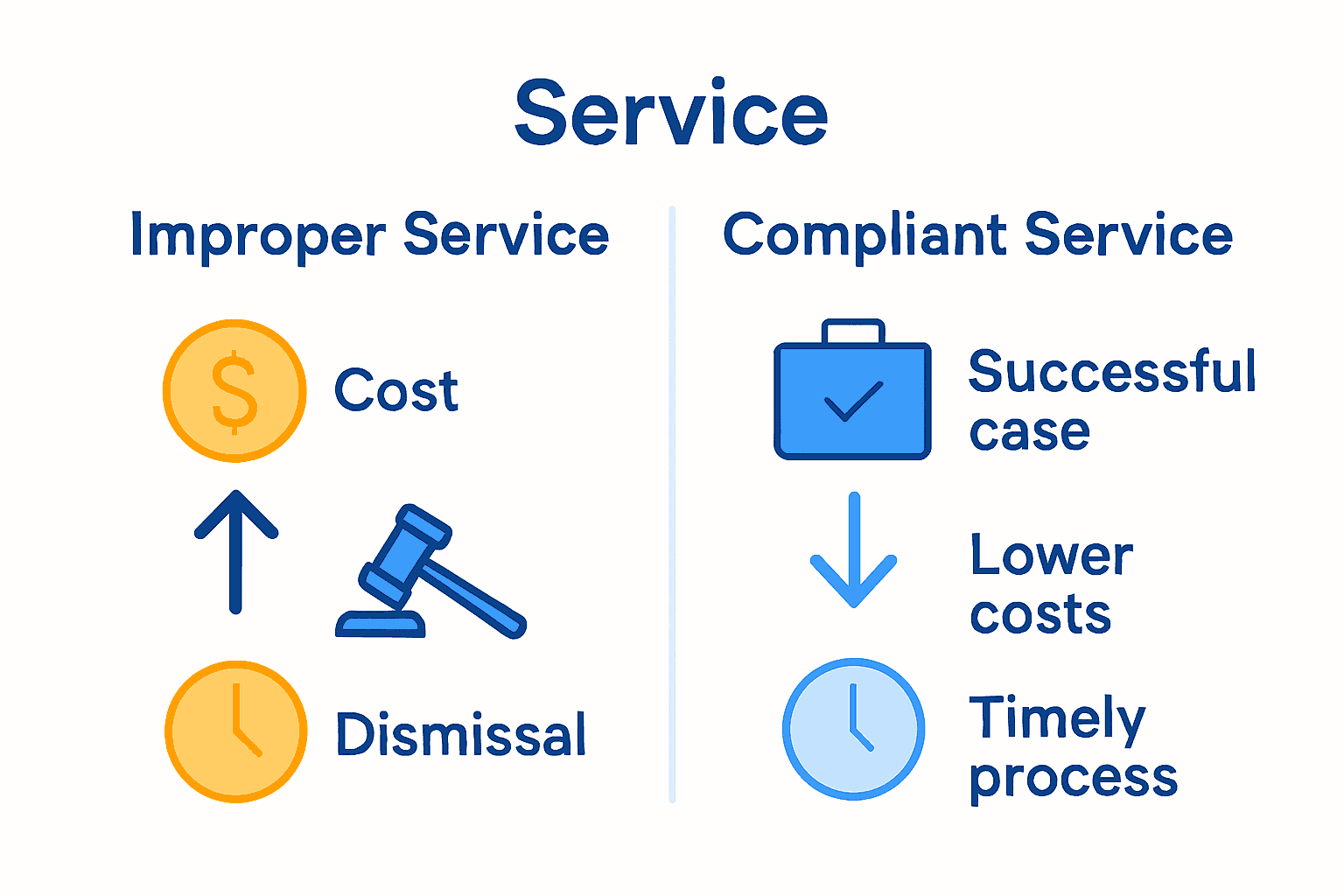
- Case dismissals
- Invalidation of legal proceedings
- Loss of legal standing
- Potential statute of limitations complications
- Reputational damage for legal professionals
Successful navigation of service of process requires meticulous attention to detail, comprehensive understanding of legal requirements, and a proactive approach to compliance. Professional process servers must continuously update their knowledge, maintain rigorous documentation practices, and approach each service with the utmost precision to mitigate potential risks and ensure legal effectiveness.
Simplify Your Service of Process with Expert Legal Document Support
Understanding the complex laws around service of process is essential yet challenging. If you are facing issues like proper legal notification, jurisdictional variations, or ensuring compliance with court requirements, you are not alone. Many struggle with risks such as incorrect delivery, missed deadlines, and rising costs that can delay or derail your legal case. Key terms like personal service, substituted service, and proof of service are critical but often confusing without professional guidance.
YM Doc Services offers reliable, timely, and compliant solutions tailored to ease these burdens. With services ranging from accurate process serving to comprehensive document retrieval and court filings, we handle every detail so you can focus on your case. Benefit from our expertise to avoid compliance mistakes and costly delays by choosing trusted professionals who understand jurisdictional nuances and meticulous documentation. Learn how we help streamline your legal processes by visiting our complete role of process server guide and explore the importance of process server compliance to stay ahead.
Ready to take control of your service of process challenges and protect your legal interests today?
Experience peace of mind and legal efficiency now by starting your service order with YM Doc Services at https://ymdocservices.com. Act quickly to ensure proper service that keeps your case on track without costly setbacks.
Frequently Asked Questions
What is the service of process?
Service of process is the procedure by which a party to a lawsuit provides notice of legal action to another party, ensuring proper jurisdiction and the opportunity for the defendant to respond.
What are the different types of service of process?
The three main types of service of process are personal service, substituted service, and service by publication. Each type serves a specific purpose based on the circumstances of the case.
Why is proper service of process important in legal proceedings?
Proper service of process is crucial because it establishes the court’s jurisdiction over the parties involved. Incorrect service can result in delays, dismissals, and additional legal expenses.
What are the common compliance mistakes in the service of process?
Common compliance mistakes include incorrect recipient identification, improper delivery methods, failure to meet time requirements, and incomplete documentation, all of which can jeopardize legal proceedings.
Recommended
- Service of Process Workflow: Everything You Need to Know – YM Doc Services
- Service of Process for Individuals: Complete Guide – YM Doc Services
- 7 Key Examples of Process Serving Every Client Should Know – YM Doc Services
- Process Serving for Businesses: Step-by-Step Guide to Compliance – YM Doc Services
We provide GPS-stamped, court-compliant service of process throughout Orange County, Seminole County, and West Volusia County. Licensed Florida process server — FAPPS Member · NAPPS Member · Florida Statutes Chapter 48 Compliant.