

Over 90 percent of civil lawsuits depend on proper service of process to move forward in court. This single step does more than start a legal case, it safeguards everyone’s right to be notified and respond. Without it, lawsuits can stall or collapse entirely. Understanding how the service of process workflow works protects both legal professionals and individuals from costly mistakes that can jeopardize entire cases.
Table of Contents
- Defining Service Of Process Workflow
- Variations In Service Of Process Methods
- Step‑By‑Step Service Of Process Procedures
- Process Server Qualifications And Licensing
- Legal Requirements And Time Constraints
- Risks, Pitfalls And Compliance Issues
Key Takeaways
| Point | Details |
|---|---|
| Service of Process Workflow | It is essential to ensure proper notification and jurisdiction in legal proceedings, involving steps like document preparation and proof of service. |
| Variations in Service Methods | Service methods vary by state and include personal service, substituted service, and electronic methods; the method chosen depends on case specifics. |
| Compliance and Risks | Improper service can lead to dismissal or delays; adhering to jurisdictional, identification, and timing requirements is critical to avoid legal pitfalls. |
| Process Server Qualifications | Qualifications for serving documents vary by state, emphasizing the need for legal knowledge and a clean background to ensure effective service. |
Defining Service Of Process Workflow
A service of process workflow is the critical legal procedure that ensures proper notification and legal jurisdiction in civil legal proceedings. According to Cornell Law, service of process is the fundamental mechanism by which a party to a lawsuit gives appropriate notice of legal action to another party, establishing the court’s jurisdiction over the defendant.
The workflow typically involves several precise steps designed to guarantee fair legal communication. These include:
- Identifying the defendant: Locating the exact person or entity who needs to be served
- Preparing legal documents: Drafting the summons and complaint
- Selecting an appropriate service method: Such as personal delivery, certified mail, or substitute service
- Documenting proof of service: Confirming the legal notification was completed
As defined by the United States Courts, service of process fundamentally means delivering writs or summonses to the appropriate party. This process serves two crucial purposes: establishing court jurisdiction and notifying the defendant about pending legal action. Proper execution of this workflow is not just a procedural formality but a constitutional right that ensures individuals receive fair notice before legal proceedings commence.
To ensure a smooth service of process workflow for individuals, legal professionals must meticulously follow established protocols. Each step requires precision, from document preparation to actual service, to maintain the integrity of the legal process and protect the rights of all parties involved.
Variations In Service Of Process Methods
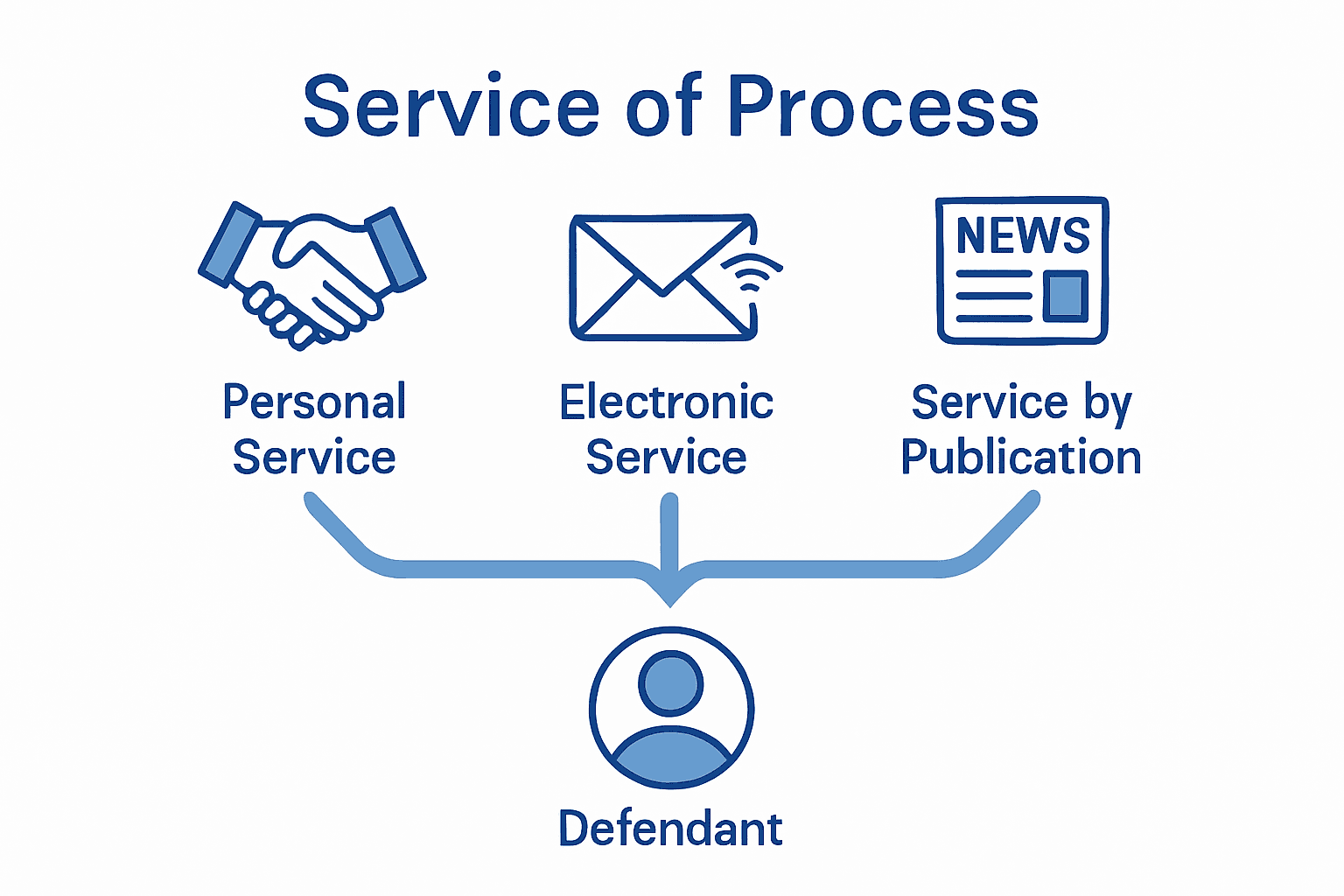
Service of process methods are not one-size-fits-all, but rather a flexible legal strategy adapted to different circumstances. According to National Conference of State Legislatures, these methods can vary significantly by state and include personal service, domiciliary service, service by mail, and service by publication.
The primary service methods include:
- Personal Service: Direct hand delivery of legal documents to the defendant
- Substituted Service: Leaving documents with an authorized person at the defendant’s residence or workplace
- Service by Mail: Sending documents via certified or registered mail
- Electronic Service: Serving documents through approved digital platforms
- Service by Publication: Legal notice published in a newspaper when the defendant cannot be located
Cornell Law emphasizes that in exceptional cases, when an individual cannot be located within the jurisdiction, alternative methods like service by publication become necessary. The choice of method depends on specific case circumstances, legal requirements, and the ability to establish proper notification.
For legal professionals seeking comprehensive insights, our guide on types of process serving offers detailed exploration of these nuanced approaches. Understanding these variations ensures that legal notifications are executed effectively, maintaining the integrity of judicial proceedings and protecting the rights of all parties involved.
Step‑By‑Step Service Of Process Procedures
Service of process involves a structured, legally precise workflow that demands meticulous attention to detail. According to the U.S. Department of Justice, there are specific procedures for serving different types of entities, each requiring unique considerations and documentation.
The comprehensive service of process procedure typically follows these key steps:
- Case File Preparation
- Gather all necessary legal documents
- Verify the correct name and address of the recipient
- Determine the most appropriate service method
- Document Verification
- Ensure all legal documents are complete and accurate
- Check jurisdictional requirements
- Confirm the validity of the service documents
- Service Execution
- Select appropriate service method (personal, substitute, mail)
- Attempt service at designated locations
- Document all service attempts
- Proof of Service
- Complete official proof of service documentation
- Record date, time, and method of service
- File documentation with the court
Professional process servers understand that each step requires precision. Missed details can invalidate the entire legal process, potentially causing case dismissals or significant delays. For legal professionals seeking more nuanced insights, our tutorial on process serving examples offers comprehensive guidance on navigating these critical procedural requirements.
The ultimate goal of these procedures is to ensure fair legal notification. This means providing the defendant with proper notice of legal proceedings, protecting their right to respond, and maintaining the integrity of the judicial system. Strict adherence to these step-by-step procedures is not just a legal requirement but a fundamental aspect of due process.

Process Server Qualifications And Licensing
Process server qualifications are far from uniform across the legal landscape. According to the National Conference of State Legislatures, licensing requirements vary dramatically between states, with some mandating strict certification and others maintaining minimal regulatory standards.
Typical qualifications for process servers generally include:
- Age Requirements: Must typically be at least 18 years old
- Background Check: Clean criminal record often mandatory
- Legal Knowledge: Understanding of service of process rules
- Physical Fitness: Ability to locate and safely approach individuals
- Professional Certification: Optional or mandatory depending on jurisdiction
The core legal standard, as noted by Cornell Law, allows considerable flexibility, with some jurisdictions permitting any adult not involved in the case to serve process. However, professional process servers are increasingly preferred due to their specialized knowledge and reliability.
For legal professionals seeking comprehensive insights into professional standards, our guide to the role of process servers provides detailed exploration of these critical requirements. Professional certification isn’t just about meeting legal minimums—it’s about demonstrating expertise, reliability, and commitment to the highest standards of legal document delivery.
Legal Requirements And Time Constraints
Legal service requirements are a complex web of precise timing and strict procedural protocols. According to the U.S. Department of Justice, service of process involves intricate legal requirements that vary depending on the type of defendant and specific jurisdictional rules.
Key time constraints and legal requirements typically include:
- Initial Service Window
- Most jurisdictions mandate service within 30-90 days of filing
- Failure to serve within specified timeframe can result in case dismissal
- Different courts may have varying specific deadlines
- Defendant-Specific Requirements
- Corporate entities often have different service protocols
- Government agencies require specialized notification procedures
- Individual defendants have standard personal service requirements
- Proof of Service Documentation
- Detailed records must be filed with the court
- Exact date and method of service must be documented
- Affidavits of service require precise legal language
The primary objective of these constraints is ensuring fair legal notification while maintaining judicial efficiency. Missed deadlines or improper service can completely derail legal proceedings, making precision absolutely critical.
For legal professionals navigating these complex requirements, our guide to serving documents out of state offers comprehensive insights into managing intricate service protocols across different jurisdictions. Understanding these nuanced legal requirements isn’t just about following rules—it’s about protecting the fundamental rights of all parties involved in legal proceedings.
Risks, Pitfalls And Compliance Issues
Service of process compliance represents a minefield of potential legal complications. Cornell Law highlights that improper service can lead to devastating consequences, including complete case dismissal or significant legal delays.
The most critical risks and compliance challenges include:
Jurisdictional Errors
Serving documents outside authorized geographic boundaries
Misunderstanding state-specific service requirements
Failing to follow precise legal notification protocols
Identification Mistakes
Serving documents to incorrect individuals
Misidentifying legal entities or representatives
Incomplete or inaccurate recipient verification
Timing Violations
Missing critical service deadlines
Exceeding statutory service windows
Inconsistent documentation of service attempts
According to the National Conference of State Legislatures, compliance issues stem directly from the complex variations in state-specific rules. These variations can invalidate service attempts, potentially destroying entire legal proceedings.
For legal professionals seeking to navigate these intricate compliance landscapes, our process server compliance guide offers comprehensive strategies to mitigate risks. Understanding these potential pitfalls isn’t just about avoiding mistakes—it’s about protecting the fundamental integrity of legal processes.
Simplify Your Service of Process Workflow with Professional Support
Navigating the detailed steps of service of process can be overwhelming. From identifying the right service method to meeting strict legal deadlines and maintaining accurate proof of service, every mistake risks costly delays or case dismissals. Your goal is clear: ensure flawless legal notification and protect your clients’ rights while reducing the stress that accompanies these complex procedures.
Take control of your legal document delivery with YM Doc Services. Our trusted process serving solutions are designed to uphold compliance, improve efficiency, and handle the toughest cases with care. Explore our guide to the role of process servers to understand how professional expertise makes a decisive difference. When deadlines matter most and accuracy is non-negotiable, rely on us for dependable service and complete peace of mind. Visit YM Doc Services today to get started and safeguard your legal workflows.
Frequently Asked Questions
What is service of process and why is it important?
Service of process is the legal procedure of notifying a party of pending legal action. It is crucial because it establishes the court’s jurisdiction and ensures that the defendant receives fair notice before legal proceedings commence.
What are the common methods of service of process?
Common methods of service of process include personal service, substituted service, service by mail, electronic service, and service by publication, depending on the circumstances of the case.
What steps are involved in the service of process workflow?
The service of process workflow typically includes preparing legal documents, verifying the defendant’s information, executing the service through appropriate methods, and documenting proof of service.
What risks are associated with improper service of process?
Improper service can lead to jurisdictional errors, identification mistakes, and timing violations, potentially resulting in case dismissal or significant legal delays.
Recommended
- Service of Process for Individuals: Complete Guide – YM Doc Services
- 7 Key Examples of Process Serving Every Client Should Know – YM Doc Services
- 7 Essential Legal Document Process Tips for Smooth Results – YM Doc Services
- Complete Guide to the Role of Process Server – YM Doc Services
We provide GPS-stamped, court-compliant service of process throughout Orange County, Seminole County, and West Volusia County. Licensed Florida process server — FAPPS Member · NAPPS Member · Florida Statutes Chapter 48 Compliant.