

Did you know more than 40 percent of legal cases face delays because of mistakes in serving documents out-of-state? Failing to follow each state’s rules can stall your case, waste money, and even risk dismissal. Understanding how to serve legal documents across state lines saves time and keeps your proceedings on track. Discover clear, step-by-step strategies designed to help you serve papers correctly and protect your case from costly setbacks.
Table of Contents
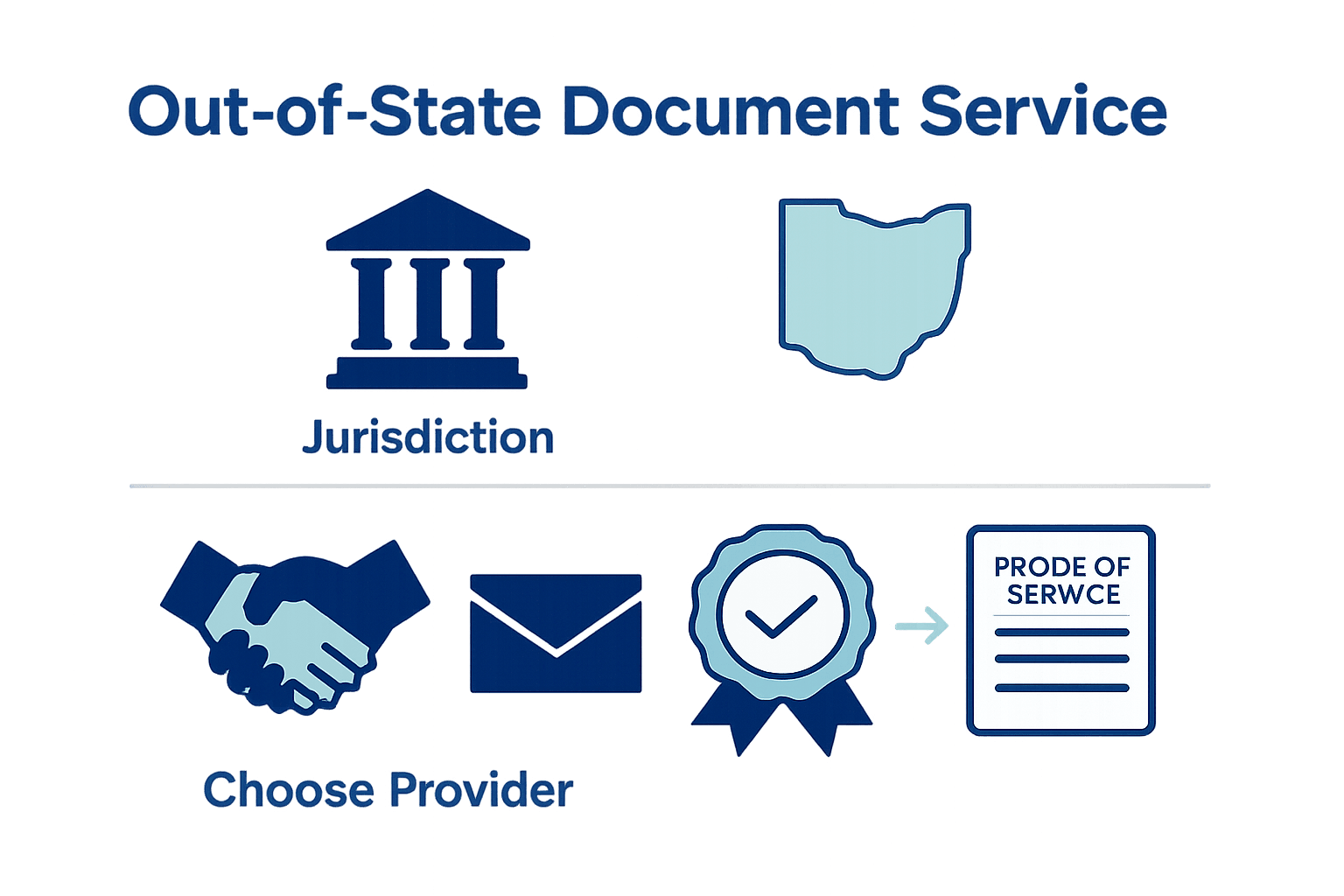
- Step 1: Identify The Court Jurisdiction And Target State Requirements
- Step 2: Select A Qualified Out-Of-State Process Server
- Step 3: Prepare And Package Legal Documents Properly
- Step 4: Arrange For Service And Track Delivery Status
- Step 5: Obtain And Review Proof Of Service
Quick Summary
| Key Point | Explanation |
|---|---|
| 1. Identify Court Jurisdiction First | Determine the correct court with authority over your case to ensure proper document service. |
| 2. Select a Qualified Process Server | Choose a professional experienced in interstate service to navigate complex legal requirements. |
| 3. Prepare Documents Carefully | Organize and package your documents with required details to facilitate successful delivery. |
| 4. Track Delivery Status Proactively | Maintain communication with your process server and request service updates throughout the process. |
 |
|
| 5. Obtain Valid Proof of Service | Ensure the proof of service is complete and correct to validate that all legal requirements were met.|
Step 1: Identify the Court Jurisdiction and Target State Requirements
Serving legal documents across state lines requires precision and understanding of jurisdiction rules. Before dispatching any papers, you need a strategic approach that respects each state’s unique legal landscape.
First, pinpoint the exact court with jurisdiction over your case. This means identifying which state court system has legal authority to process your documents. According to Firefly Legal, different states have varying requirements for process serving that can significantly impact document delivery.
Research the specific state’s rules meticulously. Each state maintains distinct regulations regarding process serving methods. Some critical areas to investigate include:
Here’s a summary of key requirements for serving legal documents in another state:
| Requirement Area | Common Variations | Why It Matters |
|---|---|---|
| Service Methods | Personal delivery Substitute service | Determines valid ways to serve papers |
| Process Server Licensing | Required (some states) Not required (others) | Impacts who may legally serve |
| Service Timeframes | Within days Within weeks | Affects timely compliance |
| Proof of Service | Affidavit needed Standard form State-specific | Validates court notification |
| Restricted Hours | No weekends No evenings No holidays | Could invalidate improper service |
- Acceptable service methods (personal delivery, substitute service, mail)
- Licensing requirements for process servers
- Specific timeframes for document service
- Proof of service documentation standards
- Restricted service hours (some states prohibit weekend service)
Contact the local court clerk or review official state judicial websites to confirm precise requirements. These resources will provide authoritative guidance on jurisdiction specific protocols.
Pro Tip: When in doubt, consult a local attorney familiar with the target state’s legal procedures to ensure full compliance.
By carefully verifying jurisdiction and state requirements upfront, you prevent potential service challenges that could derail your legal proceedings. Your next step will involve selecting an appropriate process server who understands these nuanced requirements.
Step 2: Select a Qualified Out-of-State Process Server
Choosing the right process server for out-of-state document delivery can make or break your legal proceedings. You need a professional who understands complex interstate service requirements and can navigate jurisdictional challenges with precision.
According to Firefly Legal, not all process servers are equipped to handle out-of-state service. Some critical factors to consider include the server’s experience with interstate regulations, skip tracing capabilities, and comprehensive understanding of both the originating and receiving state’s legal protocols.
When selecting your process server, prioritize these key qualifications:
- Proven experience in interstate document service
- Comprehensive knowledge of state specific service requirements
- Professional licensing and certifications
- Track record of successful out-of-state document deliveries

- Strong skip tracing and location verification skills
Verify the process server’s credentials thoroughly. Request documentation of their interstate service experience, professional references, and specific examples of successful service in the target state.
Pro Tip: Always confirm the process server’s familiarity with the specific state’s legal nuances before engaging their services.
Understanding the Role of Process Servers in Divorce can provide additional insights into the complexities of professional document service. Your next step will involve preparing the precise documentation needed for accurate out-of-state service.
Step 3: Prepare and Package Legal Documents Properly
Accurate document preparation is your first line of defense in ensuring successful out-of-state legal service. The way you package and present your documents can significantly impact the efficiency and effectiveness of the service process.
According to Firefly Legal, comprehensive document preparation goes well beyond simply printing paperwork. You need to provide detailed information that helps process servers locate and serve the intended recipient.
When preparing your documents, include the following critical elements:
- Complete and legible original documents
- Specific case type and jurisdiction information
- Physical description of the recipient (height, weight, distinguishing features)
- Recent photographs if available
- Known vehicle information
- Work schedule and typical locations
- Any special circumstances or potential service challenges
Ensure all documents are organized chronologically and clearly labeled. Each state may have different requirements for original versus copied documents, so verify the specific rules for your target jurisdiction.
Pro Tip: Create a comprehensive information packet that gives process servers every possible advantage in completing successful service.
Complete Guide to Legal Document Delivery (US) can provide additional insights into streamlining your document preparation. Your next step involves submitting these meticulously prepared documents to your selected process server for interstate delivery.
Step 4: Arrange for Service and Track Delivery Status
Successful out-of-state document service requires strategic coordination and proactive tracking. Your goal is to ensure the legal documents reach the intended recipient through the most effective method possible.
According to Firefly Legal, process servers offer multiple service methods designed to handle challenging delivery scenarios. These typically include personal delivery, substitute service, and mail service, with skip tracing available for hard-to-locate individuals.
When arranging service, communicate these key details with your process server:
- Precise recipient location information
- Preferred service method
- Specific time windows for potential service
- Any known challenges in locating or serving the recipient
- Urgency of the document delivery
Most professional process serving agencies provide real-time tracking and status updates. Request a comprehensive reporting mechanism that includes:
- Confirmation of service attempt
- Detailed service logs
- Proof of service documentation
- Timestamp of delivery efforts
Pro Tip: Always request written confirmation and maintain open communication with your process server throughout the service process.
7 Essential Legal Document Process Tips for Smooth Results can help you refine your document service strategy. Your next step involves carefully reviewing the returned proof of service to ensure legal compliance and proper documentation.
Step 5: Obtain and Review Proof of Service
Obtaining a comprehensive and legally valid proof of service is the final critical step in your out-of-state document delivery process. This document serves as your official confirmation that legal notification requirements have been properly fulfilled.
Your proof of service document should contain detailed information that substantiates the successful delivery of legal documents. This includes specifics about the service method, date, time, location, and the individual who received the documents.
When reviewing the proof of service, carefully examine these essential elements:
- Date and exact time of service attempt
- Method of service (personal delivery, substitute service, mail)
- Name and description of the person served
- Location where service was completed
- Process server’s official identification and credentials
- Sworn statement or affidavit verifying service details
Pay close attention to any potential discrepancies or incomplete information that might compromise the legal validity of the service. Even minor errors could potentially invalidate your entire service attempt.
Pro Tip: Retain multiple copies of the proof of service and store them in both physical and digital formats for future reference.
Affidavit of Service / Proof of Service offers additional guidance on understanding these critical documentation requirements. Your next step involves filing this proof with the appropriate court to formally document the service completed.
Streamline Your Out-of-State Document Service with YM Doc Services
Navigating the challenges of serving documents across state lines can feel overwhelming. From understanding specific state requirements to tracking your delivery and securing valid proof of service, each step demands accuracy and attention to detail. If you are seeking a reliable partner who knows the complexities of interstate process serving and can handle licensing, skip tracing, and timely filings, YM Doc Services is here to help.
Take control of your legal document delivery today by trusting professionals who prioritize compliance and efficiency. Visit YM Doc Services to explore our full range of solutions including Affidavit of Service / Proof of Service and expert guidance on Understanding the Role of Process Servers in Divorce. Don’t risk delays or invalid service. Act now to ensure your out-of-state documents are served properly and on time.
Frequently Asked Questions
What are the initial steps to take when serving documents out of state?
Begin by identifying the specific court with jurisdiction over your case and research that state’s unique requirements for process serving. Make sure to compile details like acceptable service methods and licensing requirements for process servers to ensure compliance.
How can I select a qualified process server for out-of-state service?
Choose a process server who has proven experience with interstate document delivery and a strong understanding of both originating and receiving state’s legal protocols. Request documentation of their credentials and past success in serving documents in the target state.
What information should I include when preparing legal documents for out-of-state service?
Include complete and legible original documents, the recipient’s physical description, and any relevant details like their recent photographs, work schedule, and known locations. This comprehensive information packet will help the process server effectively locate and serve the intended recipient.
How can I track the delivery status of my out-of-state documents?
Coordinate closely with your chosen process server to establish a system for tracking delivery status. Request regular updates that include confirmation of service attempts and timestamps to monitor progress effectively.
What should I look for in the proof of service once the documents are delivered?
Ensure the proof of service includes details such as the date and time of service, the method used, and information about the person who received the documents. Carefully review this documentation for any discrepancies that could affect its legal standing.
How do I file the proof of service with the court?
After reviewing the proof of service for accuracy, file it with the appropriate court as required by that jurisdiction. Retain multiple copies of this document in both physical and digital formats for your records.