
Millions of people rely on legal document templates to save time, yet over 60 percent risk critical errors when misusing these tools without proper guidance. Understanding legal templates goes beyond simply filling in blanks. The right approach helps prevent costly mistakes and safeguards your interests. This article uncovers the real strengths and limitations of legal document templates so readers can make informed, confident choices with every form they use.
Table of Contents
- Defining Legal Document Templates And Common Myths
- Major Types Of Legal Document Templates
- Key Benefits And Essential Features
- Legal Standards And Compliance Requirements
- Risks, Limitations, And Best Practices
Key Takeaways
| Point | Details |
|---|---|
| Understanding Template Limitations | Legal document templates require customization and should not be viewed as one-size-fits-all solutions. Professionals must ensure compliance with jurisdiction-specific laws. |
| Structured Frameworks Enhance Efficiency | Templates significantly reduce drafting time, standardize language, and minimize errors, making them valuable tools if used correctly. |
| Ongoing Compliance is Essential | Regular updates to templates are necessary to reflect legal changes and maintain compliance with evolving standards and specific procedural requirements. |
| Proactive Review Process | Implementing a dynamic internal review process and consulting legal professionals can mitigate risks associated with template use and ensure accuracy. |
Defining Legal Document Templates and Common Myths
Legal document templates represent standardized frameworks designed to streamline the complex process of legal drafting. According to New York Law School Library, these templates provide a crucial foundation by offering boilerplate language that can be adapted for various legal needs. However, professionals must understand that these are not one-size-fits-all solutions.
Common myths about legal document templates often mislead individuals and businesses. Many people incorrectly assume these templates are universally applicable across different jurisdictions and scenarios. In reality, legal templates require careful customization and professional review. As research from University of Mary Washington Library indicates, governmental documents and templates have specific purposes and limitations that demand nuanced understanding.
Successful use of legal document templates involves several critical considerations:
- Verifying current legal compliance
- Understanding jurisdiction-specific requirements
- Tailoring language to specific case details
- Consulting legal professionals for complex scenarios
While templates provide an efficient starting point, they should never be considered a complete substitute for professional legal advice. Each document requires meticulous review and potential modification to ensure accuracy and legal validity. Smart practitioners view templates as valuable tools, not definitive solutions.
Learn more about essential legal documents with our comprehensive guide on legal paperwork basics.
Major Types of Legal Document Templates
Legal document templates encompass a diverse range of standardized forms designed to address specific legal needs across various professional and personal scenarios. Consent documents represent one critical category, with specialized templates serving different contexts. According to University of Illinois Office for the Protection of Research Subjects, these templates include standard consent forms, authorization documents, and assent forms tailored for specific research scenarios.
The primary categories of legal document templates typically include:
- Business Legal Templates
- Partnership agreements
- Employment contracts
- Non-disclosure agreements
- Personal Legal Templates
- Last will and testament
- Power of attorney
- Real estate documents
- Litigation and Compliance Templates
- Settlement agreements
- Release forms
- Compliance documentation
Research institutions like Georgetown University Research Services highlight the importance of specialized templates that ensure compliance with ethical and legal standards. These templates are not mere paperwork but crucial instruments that provide structure, clarity, and legal protection across different domains.
Here’s a summary of the major types of legal document templates and their common uses:
| Template Category | Typical Documents | Primary Users |
|---|---|---|
| Business Legal Templates | Partnership agreements Employment contracts Non-disclosure agreements | Businesses Entrepreneurs |
| Personal Legal Templates | Last will and testament Power of attorney Real estate documents | Individuals Families |
| Litigation & Compliance | Settlement agreements Release forms Compliance documentation | Attorneys Legal teams |
| Research Consent Templates | Standard consent forms Authorization documents Assent forms | Researchers Institutions |
Professionals and individuals must approach legal document templates with a nuanced understanding. While these templates offer a solid foundation, they require careful customization to address specific circumstances. Each template serves as a strategic starting point, but should always be reviewed and potentially modified by legal professionals to guarantee accuracy and relevance.

Discover our guide to essential legal documents for comprehensive insights.
Key Benefits and Essential Features
Legal document templates offer transformative advantages for professionals and individuals navigating complex legal landscapes. According to LegalServer, these templates streamline document creation by providing customizable fields and seamless integration with case data, dramatically enhancing efficiency and maintaining critical consistency across legal practices.
The key benefits of legal document templates include:
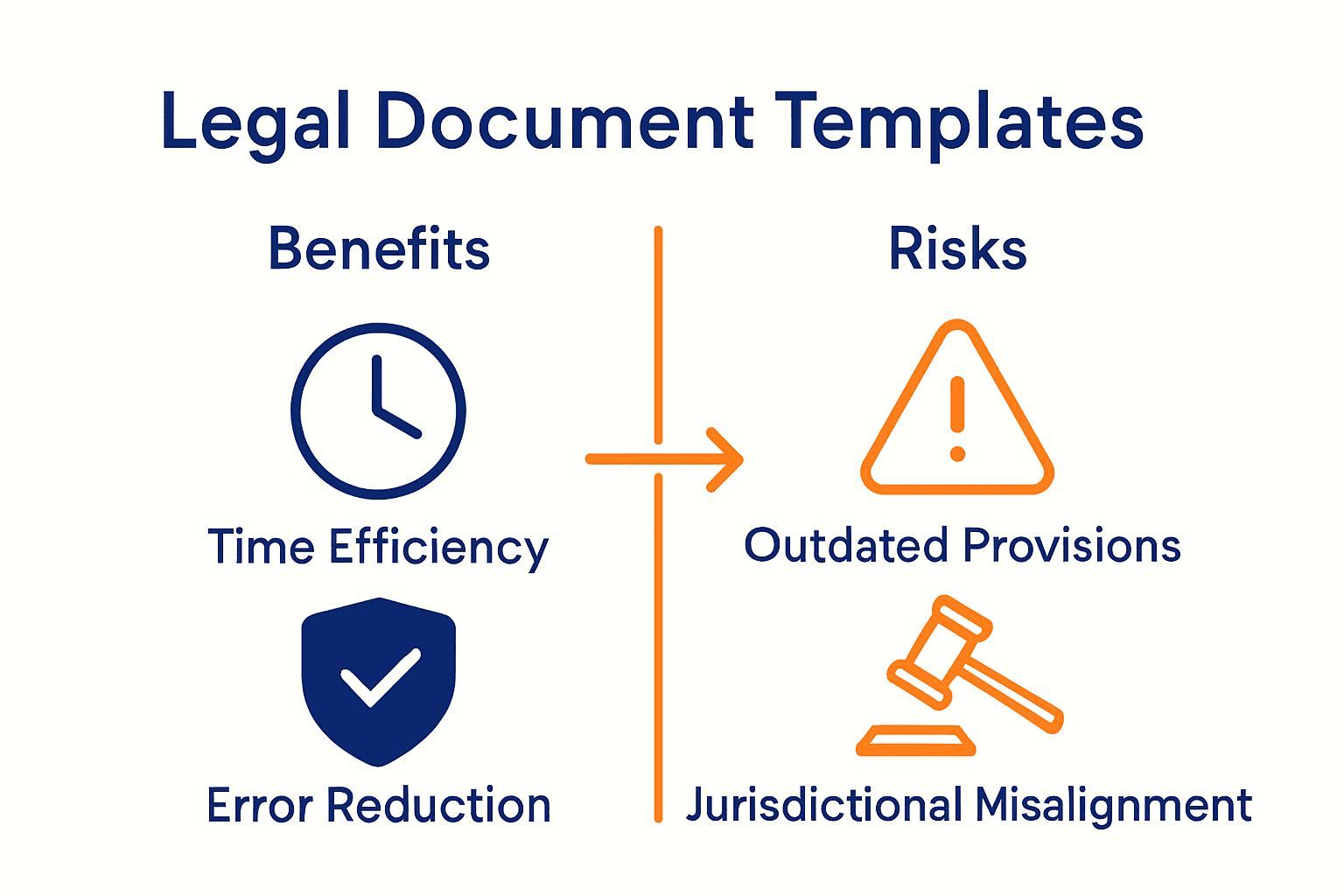
- Time Efficiency: Reduce drafting time by 60-70%
- Consistency: Standardize language and formatting
- Error Reduction: Minimize human error through structured frameworks
- Professional Presentation: Ensure polished, uniform documentation
- Cost-Effectiveness: Lower legal drafting expenses
Essential features that distinguish high-quality legal document templates are comprehensive and strategic. TemplateHub emphasizes the importance of user-friendly designs that enable confident handling of legal matters. These templates must include adaptable sections, clear instructions, and professional formatting that allows for precise customization while maintaining structural integrity.
Professionals seeking optimal legal document templates should prioritize flexibility, compliance, and adaptability. The most effective templates serve as intelligent frameworks that guide users through complex legal requirements while providing sufficient room for personalization. Smart practitioners view these templates not as rigid documents, but as sophisticated tools that simplify intricate legal processes.
Learn more about essential legal documentation tips with our comprehensive guide.
Legal Standards and Compliance Requirements
Legal compliance represents the critical foundation of any legal document template, requiring meticulous attention to detail and comprehensive understanding of regulatory frameworks. Legal document templates must navigate a complex landscape of jurisdiction-specific regulations, evolving legal standards, and precise procedural requirements that can vary dramatically across different practice areas.
Key compliance considerations for legal document templates include:
- Jurisdictional Accuracy: Ensuring templates meet specific regional legal requirements
- Regular Updates: Maintaining current language reflecting recent legislative changes
- Precise Terminology: Using legally recognized and precise language
- Ethical Standards: Adhering to professional conduct guidelines
- Data Protection: Incorporating necessary privacy and confidentiality provisions
The development of legally compliant document templates requires a multifaceted approach. Professionals must continuously monitor legislative updates, court decisions, and regulatory shifts that might impact document language and structure. This ongoing process demands rigorous review and periodic revision to maintain legal validity and effectiveness.
Successful legal document templates transcend mere formatting—they represent sophisticated instruments of legal communication. They must balance standardization with flexibility, providing a structured framework while allowing sufficient customization to address unique case specifics. Smart practitioners understand that compliance is not a one-time achievement but an ongoing commitment to legal precision and professional integrity.
Learn more about process server compliance standards with our comprehensive guide.
Risks, Limitations, and Best Practices
Legal document templates come with inherent risks that demand careful navigation. According to New York Law School Library, while legal forms can expedite document drafting, professionals must thoroughly review all relevant laws and meticulously tailor templates to specific case requirements to mitigate potential legal vulnerabilities.
Key risks and limitations associated with legal document templates include:
- Jurisdictional Misalignment: Templates might not reflect current local legal standards
- Generic Language Limitations: Insufficient customization can create legal ambiguities
- Outdated Provisions: Failure to update templates can introduce regulatory non-compliance
- Context Misinterpretation: Applying templates without understanding specific nuances
- Potential Legal Exposure: Improper template usage can create significant legal risks
University of Mary Washington Library emphasizes the critical importance of understanding specific purposes and limitations of legal documents to prevent misapplication. Best practices for mitigating these risks involve a comprehensive approach: regular template reviews, consultation with legal professionals, and maintaining a dynamic, adaptable documentation strategy.
Professionals should treat legal document templates as sophisticated tools requiring continuous refinement. This means developing a proactive approach that includes periodic legal consultations, staying informed about regulatory changes, and creating robust internal review processes. The goal is not just compliance, but developing a nuanced, flexible documentation framework that can adapt to evolving legal landscapes.
Explore our comprehensive guide to legal documentation tips for essential client insights.
Streamline Your Legal Document Process with Trusted Support
Navigating the complexities of legal document templates requires precision and compliance to avoid costly mistakes. Whether you face challenges customizing templates to meet jurisdictional standards or need to ensure your documents are reviewed and delivered on time, YM Doc Services offers reliable solutions designed to reduce your stress and save valuable time. Our professional services cover everything from process serving to court filings, helping you maintain accuracy and legal validity every step of the way.
Take control of your legal documentation today because delays or errors in legal paperwork can lead to missed opportunities or legal exposure. Visit YM Doc Services to access comprehensive support tailored for lawyers, businesses, and individuals who demand efficiency and compliance. Learn more about our legal document services and how they can complement your use of templates by ensuring timely delivery and strict adherence to legal standards. Let us help you manage your critical legal paperwork with confidence and professionalism now.
Frequently Asked Questions
What are legal document templates?
Legal document templates are standardized frameworks designed to simplify the process of legal drafting by providing boilerplate language that can be customized for various legal needs and situations.
How do I customize a legal document template?
To customize a legal document template, you should tailor the language to fit your specific case details, ensure compliance with jurisdictional requirements, and seek professional review, especially for complex scenarios.
What are the benefits of using legal document templates?
Legal document templates offer several benefits, including time efficiency in drafting, consistency in language and formatting, reduced human error, cost savings, and a polished presentation of documents.
What are the key compliance requirements for legal document templates?
Key compliance requirements include jurisdictional accuracy, regular updates to reflect legal changes, precise legal terminology, adherence to ethical standards, and incorporation of necessary privacy provisions.
Recommended
- Legal Paperwork Basics: Everything You Need to Know – YM Doc Services
- 7 Essential Legal Documentation Tips for Every Client – YM Doc Services
- 7 Essential Legal Documents You May Need Explained – YM Doc Services
- Complete Guide to Legal Document Certification – YM Doc Services
We provide GPS-stamped, court-compliant service of process throughout Orange County, Seminole County, and West Volusia County. Licensed Florida process server — FAPPS Member · NAPPS Member · Florida Statutes Chapter 48 Compliant.