

Almost half of American adults will face a legal situation requiring formal documents at some point in their lives. Navigating court forms and legal paperwork can feel intimidating, especially when the rules seem complex or unclear. Getting your documents right from the beginning saves time, stress, and prevents avoidable delays. This guide breaks down each step so you can approach the process with confidence and stay on track throughout your American legal journey.
Table of Contents
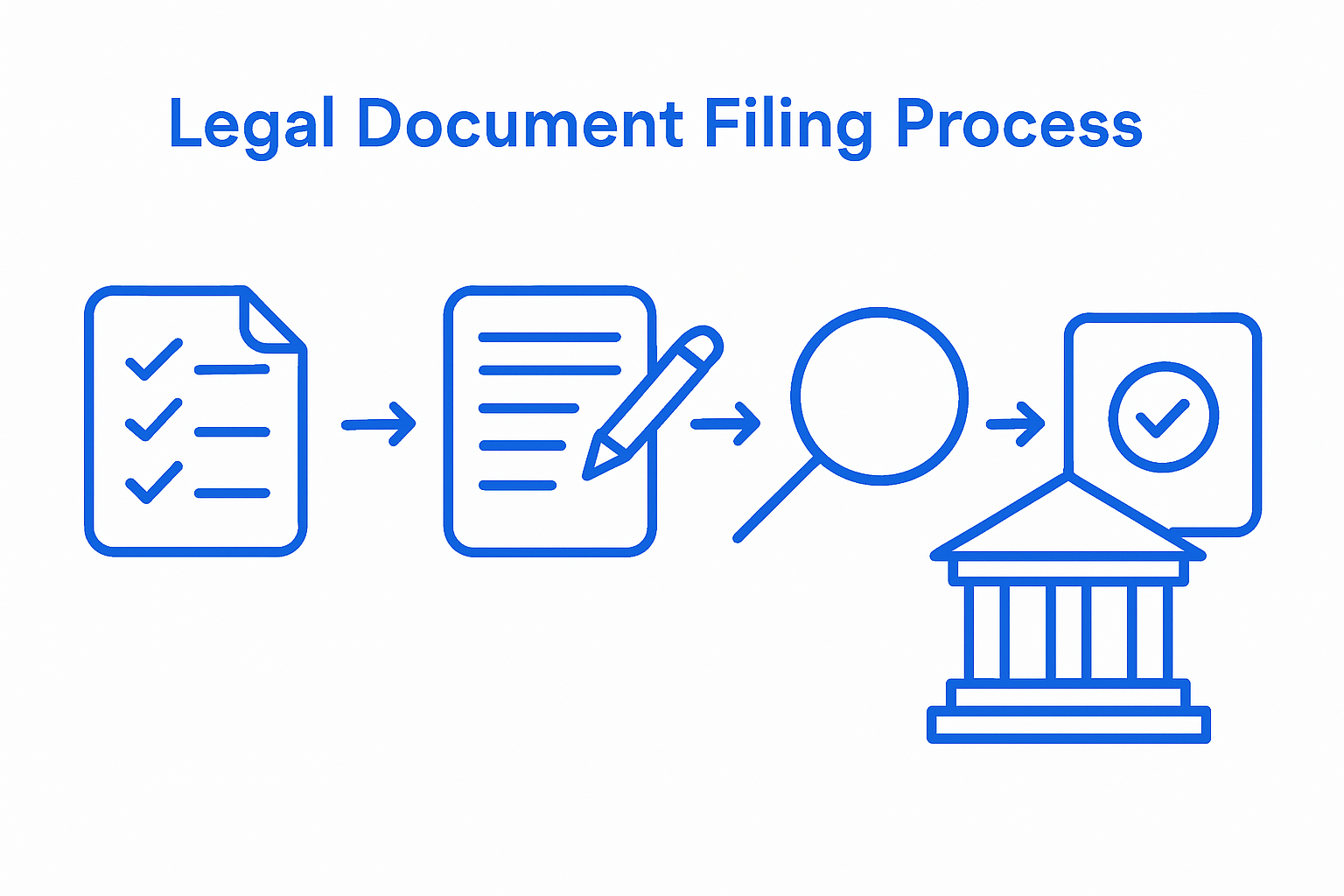
- Step 1: Gather Required Legal Documents And Information
- Step 2: Complete Legal Forms Accurately And Thoroughly
- Step 3: Review Forms For Errors And Compliance
- Step 4: Submit Legal Forms To The Correct Court Or Agency
- Step 5: Confirm Acceptance And Track Filing Status
Quick Summary
| Key Point | Explanation |
|---|---|
| 1. Create a Document Checklist | Begin by compiling a detailed list of all necessary legal documents to ensure you gather everything required for your case. |
| 2. Fill Legal Forms Thoroughly | Complete all legal forms with clear information, addressing every section to avoid delays in the process. |
| 3. Review for Accuracy | Carefully check your documents for accuracy, as even minor errors can result in significant legal complications. |
| 4. Understand Submission Protocols | Verify the correct submission method for your legal forms, including any required formats and fees. |
| 5. Track Your Submission Status | Monitor the status of your filing through online systems or by contacting the clerk’s office to ensure timely processing. |
Step 1: Gather Required Legal Documents and Information
Gathering the right legal documents is your foundational task when preparing for court or legal compliance. You need a systematic approach to collect all necessary paperwork accurately and comprehensively.
Start by creating a detailed checklist of required documents specific to your legal matter. This typically includes identification documents, financial records, relevant contracts, and any prior correspondence related to your case. When compiling these materials, carefully review each document to ensure completeness and accuracy. Understanding the basics of court forms helps prevent common filing errors that could delay your legal proceedings.
Pay special attention to official documentation requirements. Use black ink for all handwritten entries, sign where required, and make multiple copies of each document. Keep originals in a secure location and create organized digital and physical backups. Pro tip: Request certified copies of critical documents from official sources to ensure their legal validity.
As you assemble your documentation, organize them chronologically and create an index that clearly lists each document. This preparation not only demonstrates your thoroughness to the court but also helps your legal representative quickly understand the details of your case. The next step involves carefully reviewing these documents to ensure they meet all legal standards before submission.
Step 2: Complete Legal Forms Accurately and Thoroughly
Accurately completing legal forms is critical to ensuring your court filing or compliance process moves forward without unnecessary delays or complications. Your precision and attention to detail can make a significant difference in how quickly and smoothly your legal matter progresses.
When filling out legal documents, always use clear, legible handwriting or typed text. Formatting court documents correctly requires using white letter sized paper and writing in black or dark blue ink. Address every section of the form comprehensively even if some fields require you to write ‘not applicable’ or ‘unknown’. Pay close attention to each instruction and read the entire document before beginning to fill it out.

Double check all entries for accuracy including names, addresses, dates, and numerical information. Verify that your signatures are placed in the correct locations and that all required supporting documentation is attached. If you are uncertain about how to complete a specific section, consult with a legal professional or court clerk who can provide guidance. Legal document preparation guidelines can offer additional insights into creating comprehensive and accurate submissions.
Remember that incomplete or incorrect forms can result in significant processing delays or even rejection of your legal filing. Take your time, be methodical, and review your documents thoroughly before submission. The extra care you invest in this step can save you considerable time and potential legal complications down the road.
Step 3: Review Forms for Errors and Compliance
Reviewing your legal documents with meticulous attention is a critical step that can prevent potential legal setbacks or processing delays. Your careful examination ensures that every detail is accurate and compliant with court requirements.
Reviewing court forms thoroughly involves checking each section systematically. Verify that all required fields are completed with precise information and that your signatures appear exactly where needed. Pay special attention to numerical data such as dates, identification numbers, and financial information. Cross reference your entries with original source documents to confirm absolute accuracy.
Minor errors can have significant consequences in legal proceedings. As legal filing experts note, even seemingly insignificant mistakes can potentially invalidate your entire submission. Create a personal checklist that includes verifying names are spelled correctly, addresses are current, and all supporting documentation matches the information on your primary forms. If any section seems unclear, do not hesitate to consult with a legal professional who can provide guidance and prevent potential compliance issues. Remember that a thorough review now can save you substantial time and potential legal complications in the future.
Step 4: Submit Legal Forms to the Correct Court or Agency
Submitting legal forms requires precision and careful attention to ensure your documents reach the right jurisdiction and meet all procedural requirements. Understanding the specific filing protocols can prevent unnecessary delays or potential rejection of your legal paperwork.
Navigating court filing requirements involves several critical steps. Verify the exact location where your documents should be submitted either by mail, in person at the courthouse, or through online filing systems. Different courts have unique protocols for document submission including specific formatting rules, required copies, and potential filing fees. Contact the clerk of courts in advance to confirm the exact submission method and any additional documentation needed.
Careful research and verification are essential when determining the correct court or agency. Consider factors such as geographic jurisdiction, case type, and specific court division that matches your legal matter. Some jurisdictions offer multiple filing options including electronic submission, mail in forms, or in person filing. Prepare multiple copies of your documents and keep detailed records of your submission including date, method, and any confirmation numbers or receipts. Tracking your submission carefully helps ensure your legal forms are processed efficiently and provides documentation of your timely filing.
Step 5: Confirm Acceptance and Track Filing Status
Confirming your legal document submission and tracking its progress is a critical final step in ensuring your legal process moves forward smoothly. Understanding how to monitor your filing helps you stay informed and proactively manage your legal proceedings.
Accessing court electronic records provides an efficient way to track the status of your submitted documents. Most courts offer online tracking systems where you can enter your case number or filing details to check current processing stages. Request a confirmation receipt or tracking number when you submit your documents and keep this information readily available for future reference.
Different courts and agencies have varying tracking protocols. Some jurisdictions provide real time online status updates while others require direct communication with the clerk’s office. Maintain a detailed record of your submission including the exact date of filing method used and any reference numbers provided. Follow up promptly if you do not receive confirmation within the expected timeframe. Creating a systematic approach to tracking your legal documents ensures you remain informed and can quickly address any potential issues or requests for additional information.
Simplify Your Legal Document Filing and Avoid Costly Mistakes
Filing legal forms accurately and on time can be overwhelming with all the details to track like proper signatures, form formatting, and meeting exact court requirements. This article highlights the importance of gathering the right paperwork, reviewing forms carefully, and submitting to the correct court or agency to prevent delays and compliance issues. Many readers feel stressed managing these tasks alone and seek reliable, efficient solutions to ensure their filings are accepted without unnecessary complications.
At YM Doc Services we understand these challenges and offer professional support in court filings, process serving, and document retrieval to help you focus on what matters most. Our team ensures your documents meet legal standards and are delivered promptly so you avoid common pitfalls that cause rejected filings. Whether you are a lawyer, business, or individual, rely on our trusted services designed to reduce your stress and improve your legal process outcomes.
Take control of your legal filings today by partnering with YM Doc Services. Visit our website to learn how we can help you manage document delivery, process serving, and court filing tasks efficiently. Don’t wait until deadlines approach or errors appear. Contact us now to streamline your legal document management and secure your compliance success.
Frequently Asked Questions
What documents do I need to file legal forms for court?
You need identification documents, financial records, relevant contracts, and any prior correspondence related to your case. Start by creating a detailed checklist to ensure you have all necessary paperwork before proceeding with your filing.
How can I ensure my legal forms are completed accurately?
To complete your legal forms accurately, read each instruction carefully and fill out every section methodically. Use clear handwriting or typed text and verify all names, dates, and numerical data for accuracy before submission.
What should I do if I find an error in my legal documents before filing?
If you find an error in your legal documents, carefully review the relevant section and make the necessary corrections. Double-check your changes to ensure everything is accurate before submitting the forms to avoid any delays in your legal proceedings.
How do I submit my legal forms to the correct court or agency?
To submit your legal forms, verify the correct location based on your jurisdiction and case type. Prepare the necessary copies and check the specific submission methods—whether by mail, in person, or online—to ensure proper filing and minimal delays.
How can I confirm that my legal forms have been accepted by the court?
You can confirm the acceptance of your legal forms by tracking your filing status through the court’s online system or by contacting the court clerk directly. Make sure to keep your submission receipt or tracking number handy to facilitate this process.
What steps should I take if I do not receive confirmation of my filing?
If you do not receive confirmation of your filing, promptly follow up with the court clerk’s office to inquire about the status. Keeping a record of your submission date and method will help streamline this process and address any potential issues quickly.
Recommended
- Master the Court Document Preparation Workflow Easily – YM Doc Services
- Document Filing Protocols: Ensuring Legal Compliance – YM Doc Services
- Document Filing Protocols: Ensuring Legal Compliance – YM Doc Services
- 7 Essential Legal Paperwork Tips for Smooth Processing – YM Doc Services
We provide GPS-stamped, court-compliant service of process throughout Orange County, Seminole County, and West Volusia County. Licensed Florida process server — FAPPS Member · NAPPS Member · Florida Statutes Chapter 48 Compliant.