

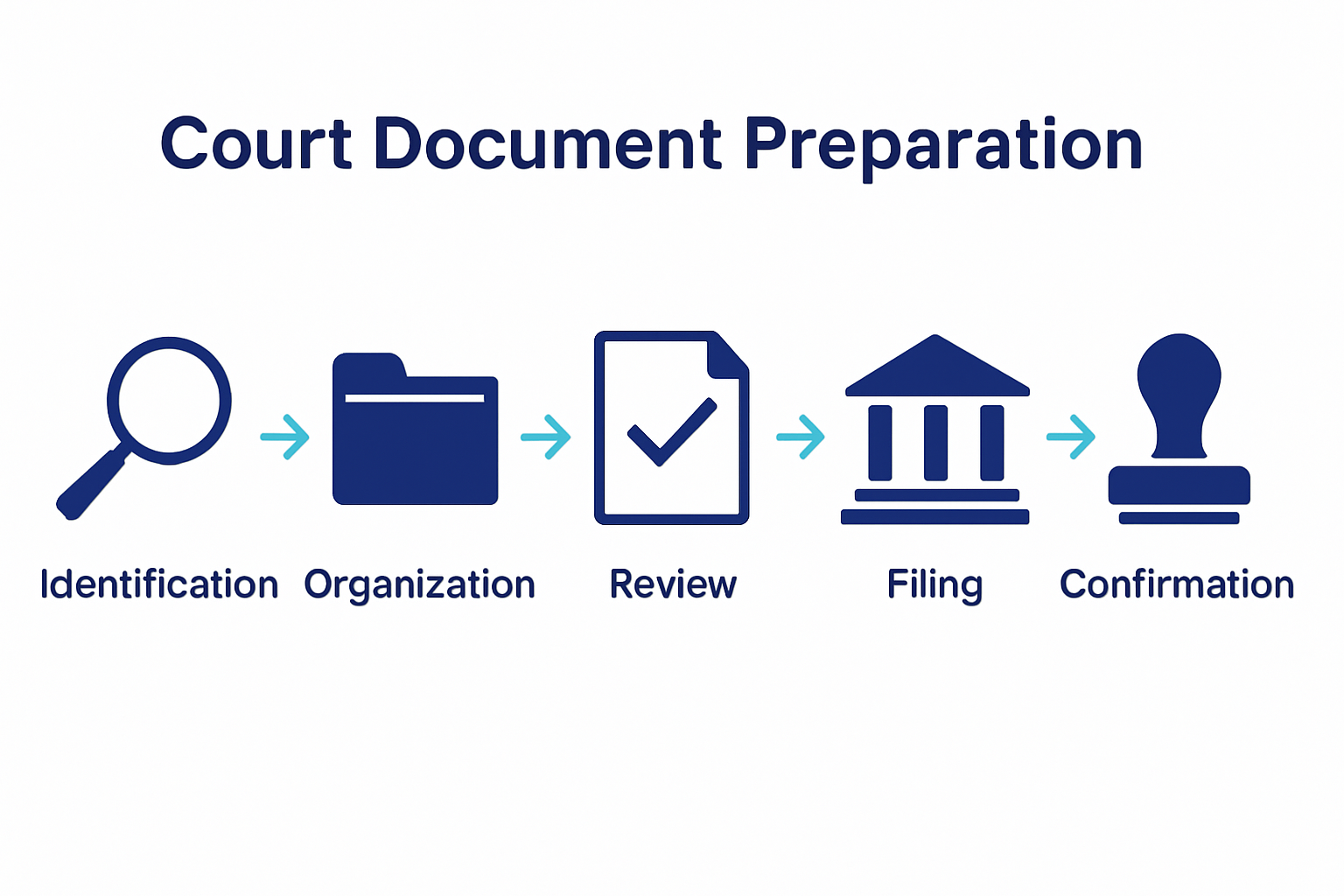
Every year, thousands of american court cases are delayed or dismissed due to paperwork mistakes or missing documents. Handling legal filings can feel overwhelming, especially when different courts have their own strict requirements. By learning how to prepare, organize, and submit court documents correctly, you gain confidence and avoid unnecessary stress while protecting your case from costly setbacks.
Table of Contents
- Step 1: Identify Required Court Documents And Gather Information
- Step 2: Organize Materials And Format Legal Documents Correctly
- Step 3: Review Documents For Accuracy And Legal Compliance
- Step 4: File Court Documents With The Appropriate Court Office
- Step 5: Confirm Filing Acceptance And Document Status
Quick Summary
| Key Message | Explanation |
|---|---|
| 1. Identify Required Documents | Research the specific court documents needed based on your legal situation to avoid complications. |
| 2. Organize Legal Materials Carefully | Create a systematic document organization system that follows jurisdiction formatting standards for clarity. |
| 3. Review for Accuracy and Compliance | Thoroughly check all documents for errors and ensure adherence to legal requirements before submission. |
| 4. File with Precision | Submit all paperwork to the correct court office, confirming filing protocols and retaining proof of submission. |
| 5. Confirm Document Acceptance | Track the status of your filed documents and verify acceptance with the court to prevent administrative issues. |
Step 1: Identify Required Court Documents and Gather Information
Successfully navigating court document preparation begins with understanding exactly what paperwork your specific legal situation requires. Identifying the right documents involves careful research and strategic information gathering that can save you significant time and potential legal complications.
Start by thoroughly investigating the specific court documents needed for your case. Different legal proceedings demand unique documentation packages legal document preparation can vary widely depending on jurisdiction, case type, and legal matter. Federal court systems like the U.S. Courts provide comprehensive guidance on accessing and understanding required documentation. This might include pleadings, motions, affidavits, subpoenas, or specialized forms specific to your legal proceedings.
To streamline your information gathering, create a systematic checklist of potential documents. Contact the specific court clerk, review official court websites, or consult with a legal professional who understands the precise documentation requirements for your case. Pay special attention to filing deadlines, formatting specifications, and any jurisdiction specific rules that could impact document acceptance. Always maintain meticulous records and create backup copies of all gathered information to prevent potential processing delays.
Step 2: Organize Materials and Format Legal Documents Correctly
Transforming your scattered legal documents into a streamlined system requires strategic planning and methodical organization. Your goal is to create a clear and professional document management workflow that ensures accuracy and simplifies future retrieval.
Begin by establishing a systematic document organization workflow that follows professional standards. Form books serve as essential reference tools for attorneys, providing templates and standardized formatting guidelines that help maintain document precision. Remove any metal fasteners or clips from original documents and sort materials into clearly labeled categories based on case type, date, or document classification. Create digital and physical backup copies of all documents to prevent potential loss.
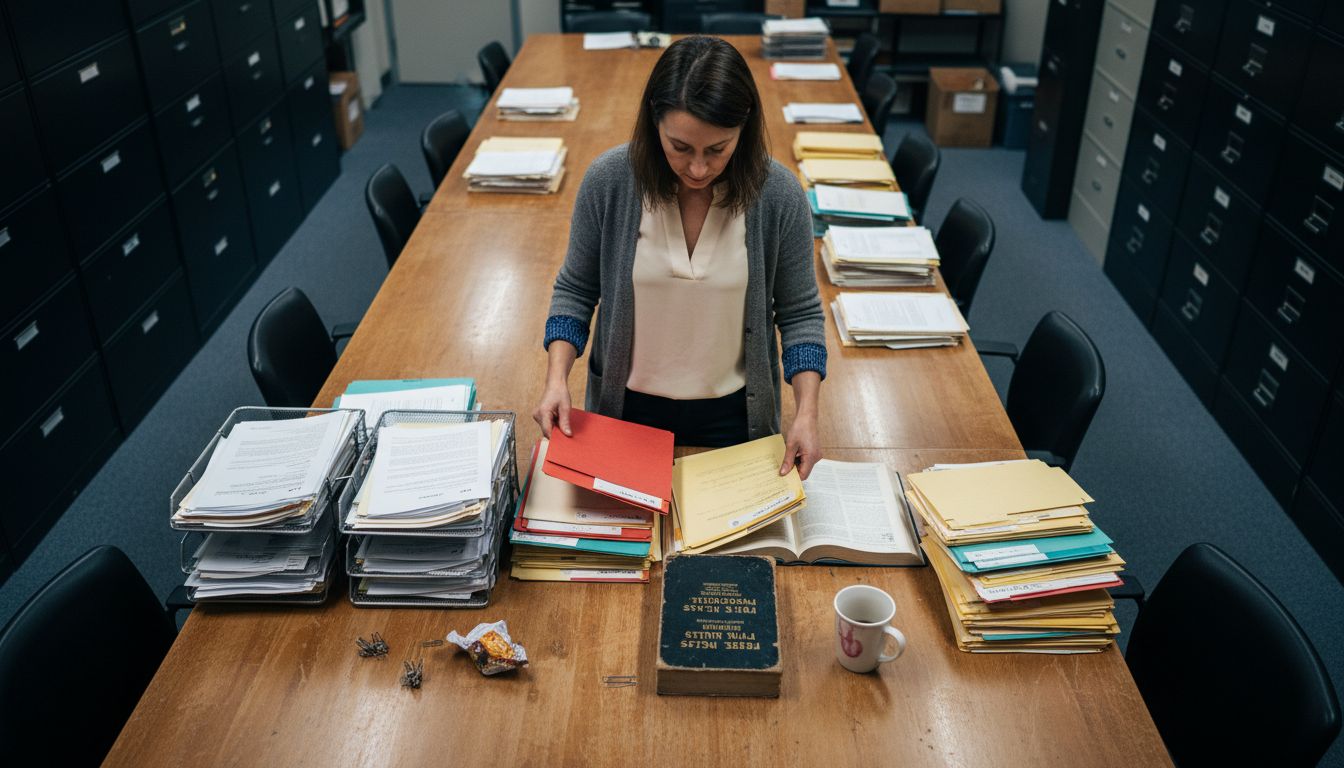
Pay close attention to formatting requirements specific to your jurisdiction. Each court has unique specifications for margins, font sizes, page numbering, and document headers. Consistent formatting demonstrates professionalism and helps prevent potential document rejection. Pro tip: Always use clean white paper, print documents double-sided when possible, and maintain high-quality resolution for clarity. By developing a meticulous organizational system, you transform complex legal paperwork into an efficient, easily navigable resource.
Step 3: Review Documents for Accuracy and Legal Compliance
Ensuring legal document accuracy is a critical step that requires meticulous attention to detail and a comprehensive verification process. Your primary goal is to eliminate errors, validate information, and confirm that every document meets stringent legal standards.
Transformer-based extraction techniques highlight the importance of carefully reviewing each document for precise legal definitions and terminology. The Jencks Act mandates complete documentation, emphasizing the need for verbatim accuracy in legal statements. Begin by cross-referencing each document against original source materials, checking for consistent formatting, correct names, dates, and legal terminology. Verify that all signatures are present, pages are numbered correctly, and no critical information is missing or altered.
To streamline your review process, create a systematic checklist that covers key compliance areas. Pay special attention to jurisdiction specific requirements, as each court may have unique validation protocols. Document verification guides can provide additional insights into best practices. Pro tip: Always perform at least two independent reviews and consider having a second legal professional double check critical documents. Thoroughness now prevents potential legal complications later.
Step 4: File Court Documents with the Appropriate Court Office
Filing court documents requires precision and careful attention to administrative protocols. Your objective is to submit all required paperwork accurately to the correct court jurisdiction while meeting specific filing requirements.
The U.S. Courts provide comprehensive guidance for navigating the complex document submission process. Unique docket numbers play a critical role in tracking and processing legal documents, so ensure you understand the specific tracking mechanisms for your jurisdiction. Before submission, verify the exact filing location based on case type, geographic jurisdiction, and court level. Double check that you have all required forms, supporting documentation, and have completed every section with accurate information.
Court filing services can help streamline this complex process. Prepare multiple copies of your documents, confirm acceptable submission methods (electronic filing, in person, or mail), and obtain a time stamped receipt as proof of filing. Pro tip: Always submit documents well before filing deadlines to account for potential processing delays or administrative complications. Careful preparation prevents potential case setbacks and ensures your legal documents enter the system smoothly.
Step 5: Confirm Filing Acceptance and Document Status
Navigating the final stages of court document submission requires careful tracking and proactive verification. Your goal is to ensure that your filed documents have been successfully processed and accepted by the court system.
Electronic public access services like PACER provide powerful tools for monitoring your document status in real time. Government information platforms offer structured ways to track court opinions and document metadata, allowing you to confirm precise filing details. Contact the court clerk directly to verify receipt, cross reference your tracking number, and confirm all submitted materials meet the required specifications. Pay close attention to any electronic notifications or updates in the system.
Legal document certification resources can help streamline this verification process. Create a personal tracking log to document every interaction, including dates, times, and contact names. Pro tip: Always request a written confirmation of document acceptance and retain copies of all correspondence. Systematic follow up ensures your legal documents are properly processed and prevents potential administrative oversights.
Simplify Your Court Document Preparation with Expert Support
Navigating the complexities of court document preparation can feel overwhelming. The article highlights key challenges like identifying the right legal paperwork, organizing materials carefully, ensuring accuracy under strict compliance standards, and successfully filing documents on time. These tasks demand precision and leave little margin for error or delay. If you want to avoid stress and uncertainty while mastering your legal documentation workflow, professional assistance can make all the difference. YM Doc Services understands these pain points and offers reliable solutions tailored for busy lawyers, businesses, and individuals who need peace of mind.
Explore how our comprehensive services—from document retrieval to efficient court filings—help you stay on top of deadlines and ensure your paperwork meets all court requirements. Trust our expertise to handle the details so you can focus on your case. See how we streamline your process and reduce the risks of rejection or administrative setbacks by visiting our court filing services page.
Get started today with YM Doc Services and experience the confidence that comes from knowing your legal documents are managed with professionalism and care. Visit YM Doc Services now to learn how our expert team simplifies court document preparation for you. Don’t wait until deadlines near take control of your legal paperwork workflow today.
Frequently Asked Questions
What steps are involved in preparing court documents?
To prepare court documents, start by identifying the required paperwork for your legal situation, then organize your materials, review for accuracy, file with the appropriate court, and confirm acceptance. Follow a systematic approach at each stage to ensure smooth processing and reduce errors.
How can I ensure my court documents are formatted correctly?
To ensure proper formatting of your court documents, carefully adhere to the specific guidelines provided by your jurisdiction, including margin sizes, font types, and numbering. Create a checklist of formatting requirements before finalizing documents to maintain professionalism and compliance.
What should I do if I miss a filing deadline for court documents?
If you miss a filing deadline, assess the situation immediately and review the jurisdiction’s protocol for late submissions. Reach out to the court clerk to understand your options, but be prepared that late filings may result in complications or rescheduling of your legal proceedings.
How can I verify that my court documents have been accepted?
You can verify acceptance of your court documents by contacting the court clerk directly and cross-referencing your tracking number. Maintain a personal tracking log to document your interactions and ensure you receive written confirmation of acceptance for your records.
What common mistakes should I avoid when preparing court documents?
To avoid common mistakes, be cautious of inaccurate information entry, incorrect formatting, and missing signatures or required attachments. Implement a systematic review process, including multiple checks to eliminate errors before filing your documents.
How do I create a checklist for court document preparation?
To create a checklist for court document preparation, list all required documents, formatting specifications, and filing deadlines based on your legal situation. Regularly update this checklist as you gather materials and ensure you can reference it easily throughout the preparation process.
Recommended
- 7 Essential Legal Paperwork Tips for Smooth Processing – YM Doc Services
- 7 Steps for a Legal Document Preparation Checklist – YM Doc Services
- Legal Document Organization Workflow: Streamline Your Process – YM Doc Services
- Master Legal Document Workflow 2025 for Fast, Compliant Delivery – YM Doc Services

