
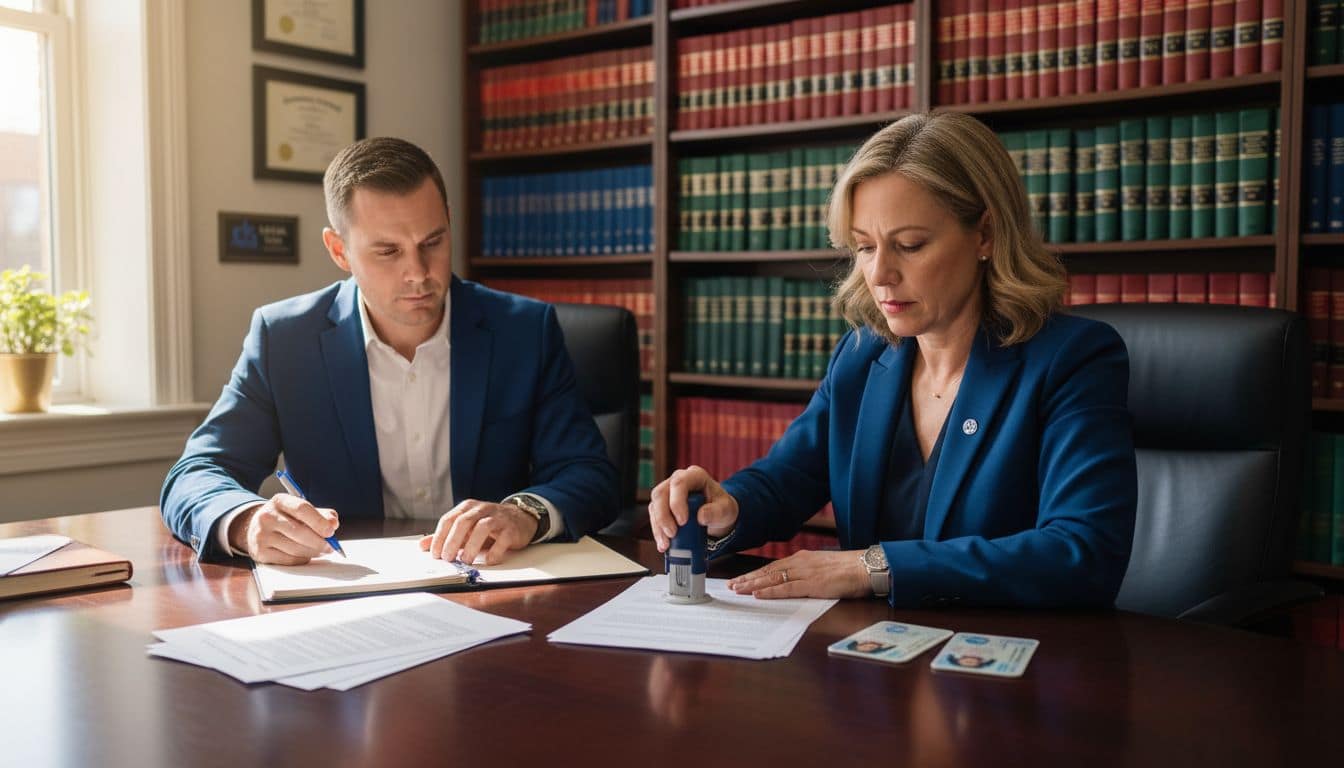
Did you know that over a billion documents are notarized each year in the United States? Notarization is more than a simple stamp on a page. It protects against fraud, ensures trust in legal agreements, and often stands between a smooth transaction and costly disputes. Understanding why notarization matters can help you avoid major headaches and keep your most important paperwork secure and legally recognized.
Table of Contents
- Notarization Defined And Why It Matters
- Types Of Documents That Require Notarization
- How The Notarization Process Works In The U.S.
- Legal Standing And Protection Provided By Notarization
- Potential Risks And Common Alternatives To Notarization
Key Takeaways
| Point | Details |
|---|---|
| Importance of Notarization | Notarization is a vital legal process that enhances the authenticity of documents and prevents fraud. It provides a reliable verification mechanism for signatures and ensures legal credibility in transactions. |
| Types of Notarized Documents | Various legal, government, and business documents require notarization, including wills, deeds, and contracts, to validate identities and ensure compliance. |
| Process of Notarization | The notarization process involves identity verification, document review, and the application of an official seal. Recent legislative changes are expanding options for electronic and remote notarizations. |
| Legal Protections | Notarized documents carry significant legal weight, preventing fraud and creating presumption of authenticity, which aids in resolving disputes in legal settings. |
Notarization Defined and Why It Matters
Notarization is a critical legal process that transforms ordinary documents into officially recognized and authenticated instruments. According to the State Department, notarization involves a notarial officer certifying the authenticity of signatures on documents, ensuring they are executed voluntarily and with proper identification.
At its core, notarization serves as a powerful verification mechanism. A notary public acts as an impartial witness who confirms the identity of individuals signing important documents, preventing fraud and establishing legal credibility. The process typically involves three key steps: document review, signature verification, and official stamping or sealing.
The significance of notarization extends far beyond a simple signature validation. As highlighted by recent legislative efforts like the SECURE Notarization Act, this process plays a critical role in modern legal and business transactions. By providing an additional layer of authentication, notarization helps protect against identity theft, ensures document integrity, and creates a reliable record of voluntary agreement.
Key benefits of notarization include:
- Preventing document fraud
- Providing legal authenticity
- Creating an official record of document execution
- Protecting all parties involved in a transaction
Whether you’re handling real estate transactions, legal agreements, or personal documents, understanding the role of notarization can save you significant time and potential legal complications. Learn more about the role of notaries in legal documents to ensure your important paperwork receives proper authentication.
Types of Documents That Require Notarization
Notarization is essential for numerous legal and official documents that demand heightened authenticity and verification. According to the National Practitioner Data Bank, documents such as identity verification forms and consent statements often require notarization to ensure their authenticity and the signer’s identity.
Legal documents represent the most common category requiring notarization. These typically include:
- Real estate deeds and property transfers
- Mortgage documents
- Wills and estate planning paperwork
- Powers of attorney
- Adoption and guardianship documents
- Affidavits and sworn statements
Government and administrative documents also frequently demand notarization. As noted by the State Department, certain federal and state agencies require notarization for applications, affidavits, and other instruments executed abroad, especially when related to obtaining benefits.
Business and financial documents represent another critical domain for notarization. Contracts, loan agreements, business partnership documents, and international business transactions often require official notarial certification to validate the identities of signing parties and ensure legal compliance.

Understanding which documents need notarization can save you potential legal complications. Learn more about legal document certification to ensure your important paperwork meets all necessary authentication requirements.
Here’s a summary comparing key document categories and their notarization requirements:
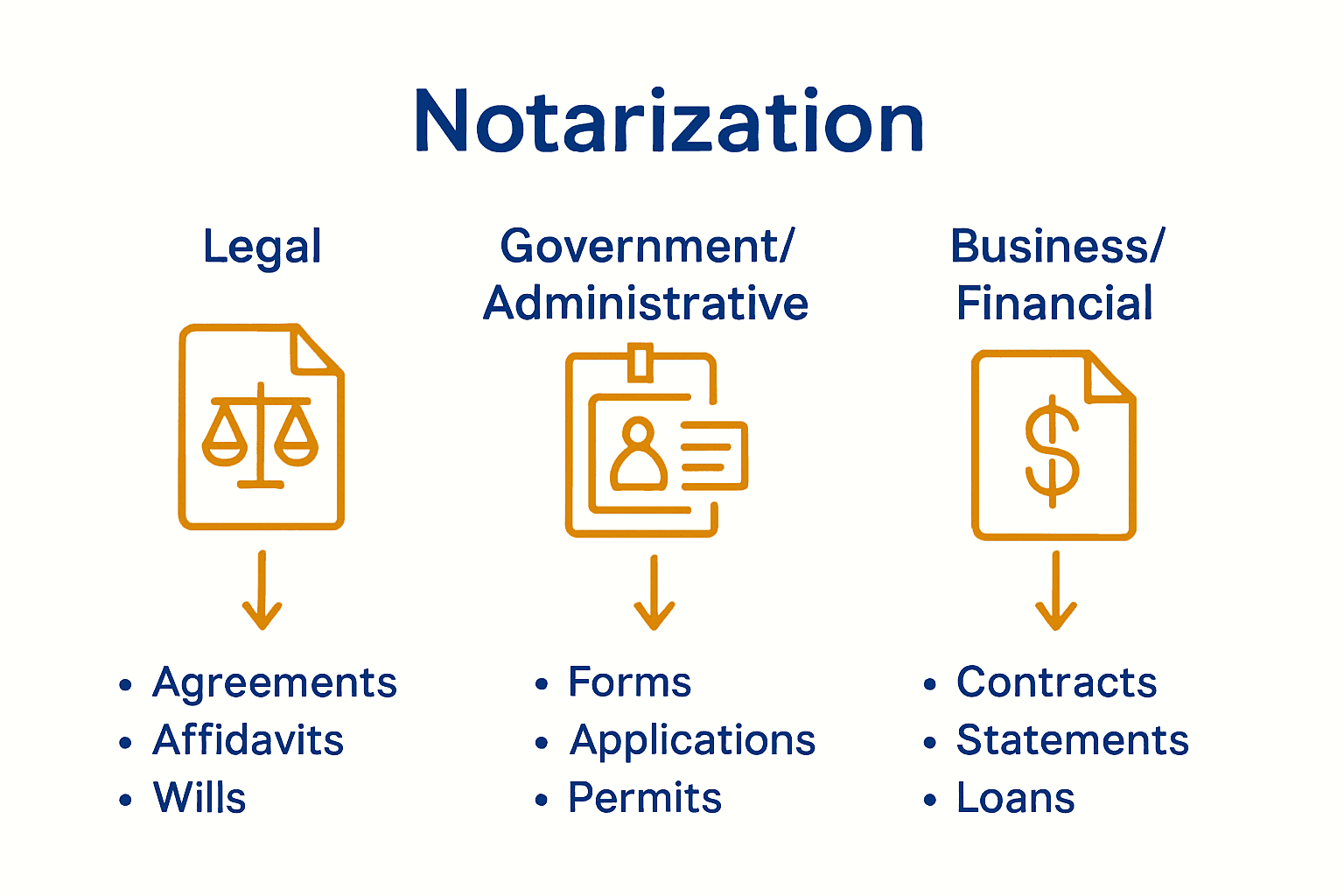
| Document Category | Common Examples | Reason for Notarization |
|---|---|---|
| Legal Documents | Wills Deeds Powers of attorney | Prevent fraud Ensure legal authenticity |
| Government & Administrative | Applications Affidavits Consent forms | Confirm identity Meet agency requirements |
| Business & Financial | Contracts Loan agreements Partnership docs | Validate parties Ensure compliance |
How the Notarization Process Works in the U.S.
The notarization process is a structured procedure designed to verify document authenticity and prevent fraud. According to the State Department, the process fundamentally involves the signer appearing before a notarial officer, presenting valid identification, and signing the document in the officer’s presence.
Verification steps for a typical notarization include:
- Document review
- Signer identity confirmation
- Willingness assessment
- Signature execution
- Official notarial seal application
Recent legislative developments are transforming traditional notarization methods. The SECURE Notarization Act now outlines procedures for electronic and remote notarizations, introducing advanced identity verification and digital record-keeping requirements. This means signers can now complete notarization processes through secure online platforms, expanding accessibility while maintaining rigorous authentication standards.
Notaries must follow strict protocols to ensure legal compliance. They are required to maintain detailed journals, verify the identity of each signer through government-issued photo identification, and confirm that signers understand the document’s contents and are signing voluntarily. Failure to adhere to these guidelines can result in the notarization being challenged or invalidated.
Explore our comprehensive guide to notary roles in legal documents to gain deeper insights into the intricate world of document authentication and legal verification.
Legal Standing and Protection Provided by Notarization
Notarization serves as a critical legal safeguard that elevates documents from ordinary paperwork to legally recognized instruments. According to the State Department, notarized documents are generally recognized as authentic and carry significant legal weight, though acceptance can vary by state laws.
Legal protections provided by notarization include:
- Preventing document fraud
- Establishing prima facie evidence of document authenticity
- Creating a legal presumption of voluntary signature
- Protecting signers from potential future disputes
- Providing a third-party verification mechanism
Recent legislative developments have further strengthened the legal standing of notarized documents. The SECURE Notarization Act provides a presumption of validity for notarized documents, ensuring their acceptance across state lines and creating a more standardized approach to document authentication.
In legal proceedings, notarized documents carry substantial credibility. Courts typically view these documents as more reliable because they involve an impartial third-party verification process. This means notarization can serve as a powerful tool in resolving potential disputes, offering an additional layer of legal protection for all parties involved.
Explore our guide to witnessing legal documents to gain deeper insights into the legal mechanisms that protect your important paperwork.
Potential Risks and Common Alternatives to Notarization
Notarization, while powerful, is not without potential complications. According to the National Notary Association, errors in notarization can lead to document rejection, highlighting the critical importance of precision in the authentication process.
Common risks associated with notarization include:
- Improper document verification
- Incorrect identification procedures
- Inconsistent signature matching
- Potential human error in documentation
- Jurisdiction-specific compliance challenges
Alternative authentication methods have emerged to address these challenges. The National Notary Association notes that Remote Ink Signed Notarization (RIN) developed during the pandemic as an innovative alternative, though it presents unique challenges in identity verification and document security.
Other alternatives to traditional notarization include signature guarantees, electronic signatures with advanced authentication, and witness certification. Each method offers different levels of legal protection and verification, depending on the specific document and jurisdictional requirements. Professionals must carefully evaluate which authentication method provides the most robust protection for their specific legal needs.
Check out our guide to legal documentation basics to understand the nuanced world of document authentication and verification.
Simplify Your Notarization and Legal Document Needs with YM Doc Services
Navigating the notarization process can feel overwhelming, especially when you need to ensure every step is completed accurately to prevent costly errors or document rejections. Whether you are handling real estate deeds, affidavits, or business contracts, the challenge lies in securing reliable and timely notarization while maintaining full legal compliance. YM Doc Services understands these concerns and offers professional support designed to ease this burden with precision and trust.

Take control of your legal documents today by partnering with us for expert notarization services, process serving, and comprehensive legal document management. You can learn more about how we assist with legal document certification and witnessing legal documents to protect your rights and interests. Don’t wait until deadlines or complex requirements become a source of stress. Visit YM Doc Services now and start simplifying your legal paperwork with confidence and reliability.
Frequently Asked Questions
What is the purpose of notarization?
Notarization is a legal process that certifies the authenticity of signatures on documents, ensures they are executed voluntarily, and provides a reliable verification mechanism to prevent fraud.
What types of documents typically require notarization?
Common documents that require notarization include real estate deeds, mortgage documents, wills, powers of attorney, affidavits, and government applications.
How does the notarization process work in the U.S.?
The notarization process involves the signer appearing before a notary public, presenting valid identification, and signing the document in the notary’s presence. The process includes verification of identity and willingness to sign.
What legal protections does notarization provide?
Notarization offers legal protections by preventing document fraud, establishing the authenticity of a signature, and providing an impartial verification process that can enhance legal credibility in disputes.
Recommended
- Complete Guide to Notary Roles in Legal Documents – YM Doc Services
- Role of Notary in Legal Documents Explained – YM Doc Services
- Witnessing Legal Documents: Complete U.S. Guide – YM Doc Services
We provide GPS-stamped, court-compliant service of process throughout Orange County, Seminole County, and West Volusia County. Licensed Florida process server — FAPPS Member · NAPPS Member · Florida Statutes Chapter 48 Compliant.