

Every american depends on properly notarized documents at some point, whether closing on a home or signing a will. Without notarization, more than 40 percent of legal disputes could become far harder to resolve. This process matters because it protects against fraud and ensures trust in agreements that shape our lives and finances. Understanding how notarization works can help everyone navigate important personal and business transactions with greater confidence.
Table of Contents
- Defining Notarization And Its Legal Purpose
- Types Of Notarizations: Jurats, Acknowledgments, More
- Step-By-Step Notarization Process Explained
- Legal Standards And State-Specific Regulations
- Notary Responsibilities, Risks, And Common Mistakes
Key Takeaways
| Point | Details |
|---|---|
| Legal Purpose of Notarization | Notarization authenticates signatures and verifies identities, providing legal protections in transactions. |
| Types of Notarizations | Acknowledgments and jurats are the primary types, serving different legal functions depending on the document. |
| Structured Notarization Process | The notarization process involves identity verification, signature witnessing, and proper documentation to prevent fraud. |
| Notary Responsibilities and Risks | Notaries must maintain professional boundaries, avoid common mistakes, and adhere to state-specific regulations to uphold legal standards. |
Defining Notarization and Its Legal Purpose
Notarization represents a critical legal process that authenticates document signatures and provides crucial verification of identity and intent. National Notary Association defines a notary public as a state-appointed official responsible for witnessing document signings and administering oaths, fundamentally increasing public trust in legal and financial transactions.
At its core, notarization serves three primary legal functions: identity verification, signature authentication, and fraud prevention. When a document is notarized, the notary public confirms the identities of signatories, ensures they are signing willingly and understand the document’s contents, and applies an official seal that transforms the document into a legally recognized instrument. As Wikipedia explains, a notarial act creates an authenticated written record providing lawful proof of a transaction.
The legal significance of notarization extends across numerous document types, including:
- Real estate transactions
- Mortgage and loan agreements
- Affidavits and sworn statements
- Power of attorney documents
- Contractual agreements
- Inheritance and estate planning documents
By requiring an impartial third-party witness who verifies identities and intentions, notarization adds a layer of legal protection that helps prevent fraud, reduces potential disputes, and creates a reliable record of important agreements. Learn more about the role of notaries in legal documents.
Types of Notarizations: Jurats, Acknowledgments, More
Notarization encompasses several specialized types, each serving distinct legal purposes. According to National Notary Public, two primary types of notarizations are acknowledgments and jurats, which differ significantly in their legal requirements and application.
An acknowledgment is a formal process where the signer personally appears before the notary, proves their identity, and declares that they have willingly signed a document. This type of notarization is commonly used for documents like deeds, mortgages, and powers of attorney. In contrast, a jurat requires the signer to not only appear in person and prove their identity but also to swear or affirm under oath that the contents of the document are true. Office of the Secretary highlights that jurats are typically used for affidavits, sworn statements, and other documents where the truthfulness of the content is paramount.
Additional types of notarizations include:
- Signature Witnessing: Verifying that an individual signed a document in the notary’s presence
- Copy Certification: Confirming that a reproduction is a true and accurate copy of an original document
- Oath or Affirmation: Administering a formal pledge of truthfulness
The specific type of notarization required depends on the document’s purpose, legal jurisdiction, and intended use. Learn more about notary roles in legal documents to understand how these different notarization types protect legal integrity and prevent fraud.
Step-By-Step Notarization Process Explained
The notarization process is a structured legal procedure designed to authenticate document signatures and prevent fraud. Notary Public Seminars outlines the critical steps involved, emphasizing the importance of thorough verification and proper documentation.
The process typically involves several key stages. First, the signer must personally appear before the notary and provide valid government-issued photo identification. The notary carefully examines the identification to confirm the individual’s identity and legal capacity to sign. Office of the Secretary highlights the importance of specific language during this process, such as using phrases like ‘acknowledged before me’ or ‘subscribed and sworn to before me’ depending on the type of notarization.
Here’s a detailed breakdown of the notarization process:
- Document Preparation
- Ensure the document is complete
- Check for any signs of alteration or fraud
- Verify all required signatures are present
- Identity Verification
- Examine government-issued photo ID
- Confirm signer’s identity
- Assess legal capacity to sign
- Signature Witnessing
- Observe the actual signing
- Confirm signer is signing willingly
- Ensure no coercion or undue influence
- Notarial Certificate Completion
- Apply official notary seal
- Add required notarial language
- Record details in notary journal
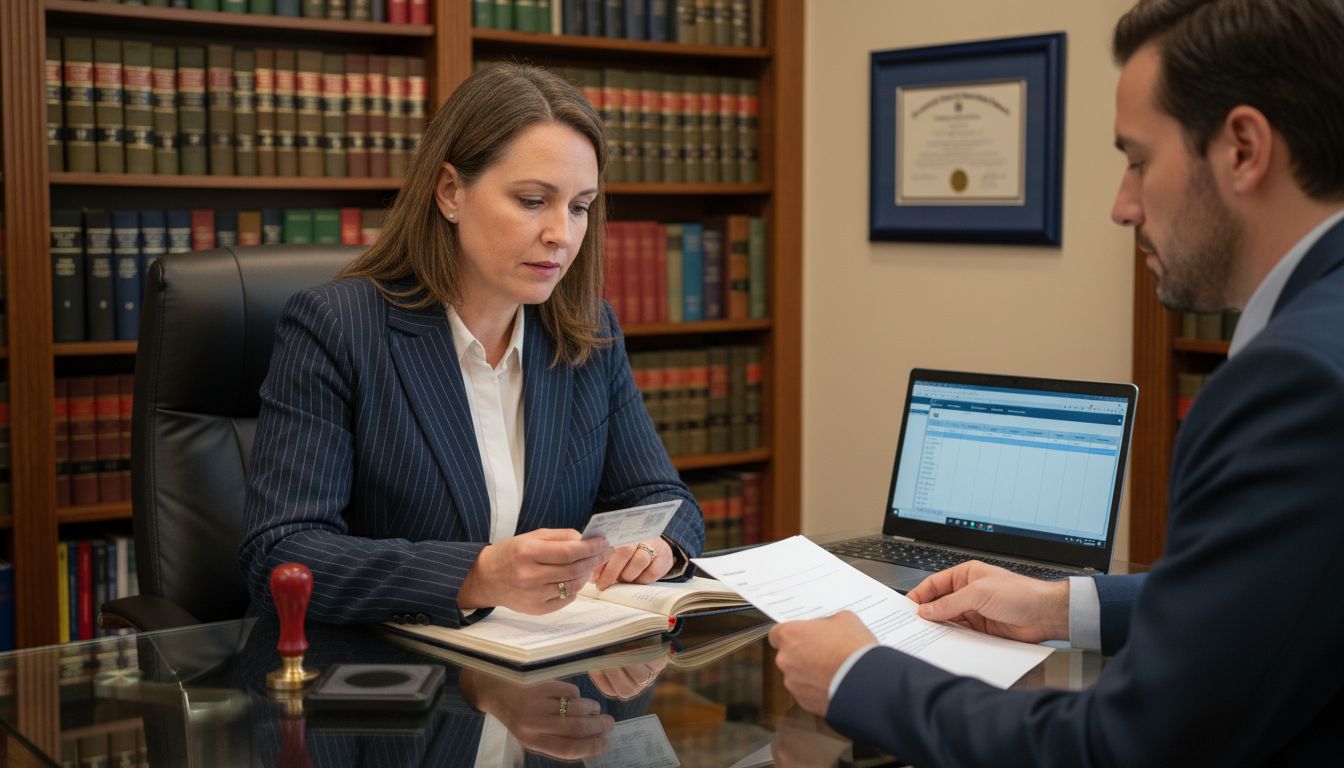
Learn more about verifying legal documents to understand the critical role of precise documentation in legal processes.
Legal Standards and State-Specific Regulations
Notary regulations in the United States are governed by complex and nuanced state-level requirements that create significant variations in legal standards across different jurisdictions. Wikipedia – Florida Notary illustrates this complexity, highlighting how notaries are typically appointed by state governors and empowered with specific legal responsibilities that can differ dramatically between states.
Each state maintains unique notarial standards that define the scope of a notary’s authority and professional limitations. Wikipedia – Pennsylvania Notary provides a clear example, noting that Pennsylvania notaries are explicitly prohibited from providing legal advice or drafting legal documents, while being authorized to perform six specific official acts such as taking acknowledgments and administering oaths.
Key variations in state notary regulations include:
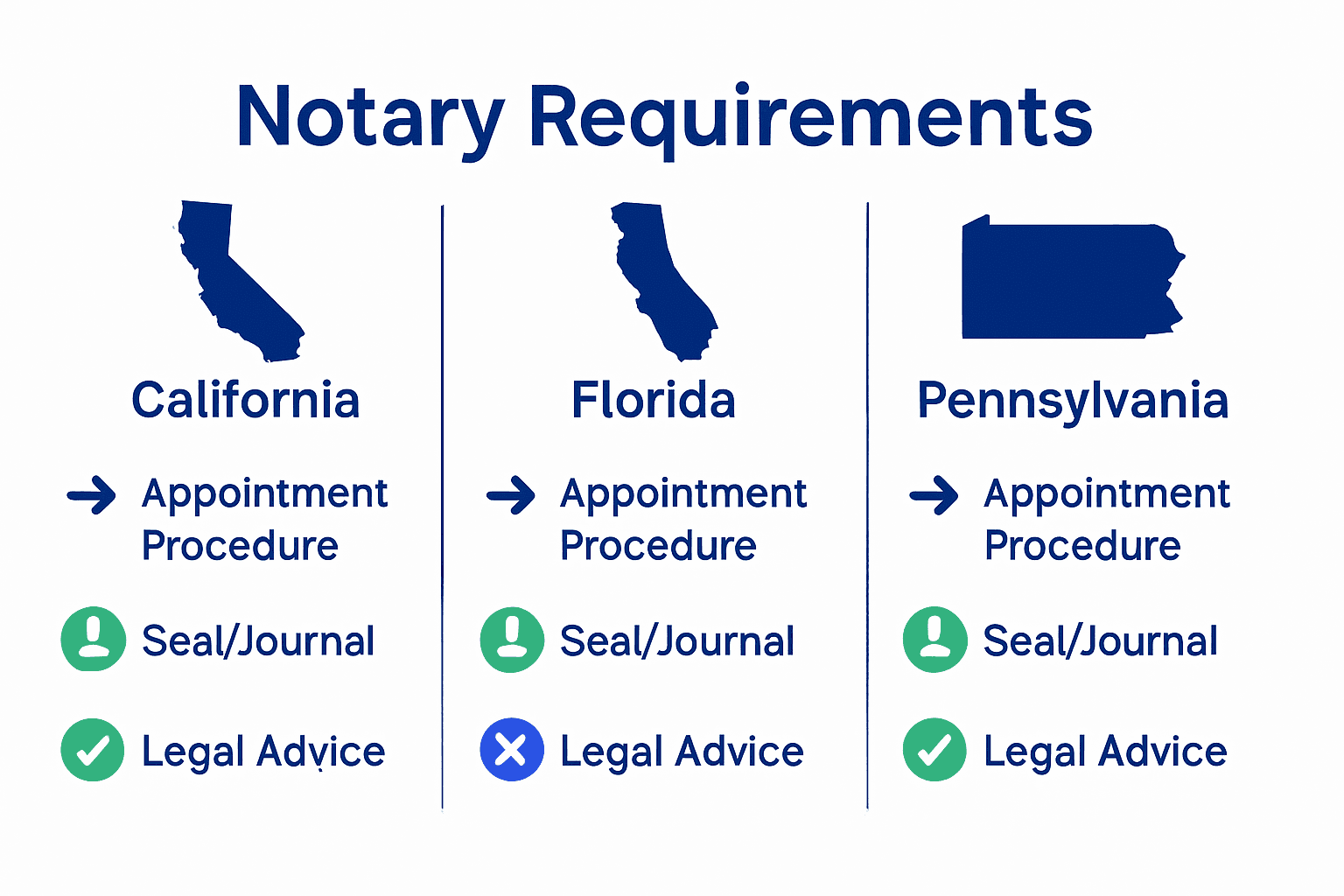
Appointment Process
- Governor or secretary of state appointments
- Background check requirements
- Term length and renewal procedures
Professional Limitations
- Scope of authorized notarial acts
- Restrictions on legal advice
- Geographical jurisdiction
Documentation Requirements
- Specific seal and stamp regulations
- Mandatory journal keeping
- Identification verification standards
Training and Certification
- Mandatory educational courses
- Examination requirements
- Continuing education credits
Learn more about notary roles in legal documents to understand the critical nuances of state-specific notarial regulations and professional standards.
Notary Responsibilities, Risks, and Common Mistakes
Notaries play a critical role in legal documentation, but their responsibilities come with significant professional risks and potential legal consequences. National Notary Association emphasizes that notaries are strictly prohibited from preparing legal documents or providing legal advice unless they are licensed attorneys, with violations potentially leading to prosecution for unauthorized practice of law.
Professional boundaries are paramount in notarial work. Notary Public Seminars warns that notaries must exercise extreme caution to avoid common mistakes that could compromise their professional standing. This includes ensuring documents are complete and free from fraud, and strictly avoiding any assistance in document preparation that might be construed as legal advice.
Common risks and mistakes for notaries include:
Improper Identification Verification
- Accepting inadequate or expired identification
- Failing to personally witness signature
- Overlooking signs of identity fraud
Boundary Violations
- Providing legal interpretations
- Helping clients complete documents
- Selecting notarial certificate wording
Documentation Errors
- Incomplete notarial certificates
- Incorrect date or location
- Failing to maintain proper journal records
Seal and Signature Mistakes
- Using an expired notary commission
- Improper seal application
- Inconsistent signature practices
Learn more about notary roles in legal documents to understand the critical importance of maintaining professional integrity and avoiding potential legal pitfalls.
Simplify Your Notarization Needs with Expert Legal Document Support
Understanding notarization requirements is essential to protect your legal interests and avoid costly mistakes. This detailed guide highlights common challenges like verifying identities, choosing the right type of notarization, and complying with state-specific regulations. If navigating these complex steps feels overwhelming or risks delaying your important transactions, you are not alone.
At YM Doc Services, we specialize in reducing the stress of managing legal documents by offering reliable and timely support tailored for lawyers, businesses, and individuals. From assisting with accurate notarization procedures to handling document workflow efficiently, our professional services ensure your notarized documents meet all legal standards without hassle. Feel confident knowing your documents are processed correctly and delivered promptly.
Ready to streamline your notarization process and ensure compliance every step of the way?

Explore how our expert team can help simplify notarization and legal document management today. Visit YM Doc Services to learn more. Discover detailed guidance on verifying legal documents and the role of notaries in legal documents to stay informed and empowered. Take control now and experience peace of mind with trusted legal document services.
Frequently Asked Questions
What is the purpose of notarization?
Notarization serves to authenticate document signatures, verify identities, and prevent fraud during legal transactions. It provides public trust in documents by confirming that signers understand and willingly enter agreements.
What are the main types of notarizations?
The two primary types of notarizations are acknowledgments and jurats. An acknowledgment involves a signer confirming they willingly signed a document, while a jurat requires the signer to swear or affirm that the contents of a document are true before the notary.
What is the notarization process?
The notarization process includes several steps: the signer must personal appear before the notary, provide valid identification, confirm their signature willingness, and the notary must complete a notarial certificate, applying their official seal and recording details in their journal.
What are common mistakes notaries make?
Common mistakes include improper identification verification, boundary violations like providing legal advice, documentation errors such as incomplete certificates, and seal or signature mistakes, which can all jeopardize the integrity of the notarization process.
Recommended
- What Is Notarization? Complete Guide for U.S. Documents – YM Doc Services
- Complete Guide to Notary Roles in Legal Documents – YM Doc Services
- How to Verify Legal Documents: A Clear, Secure Process – YM Doc Services
- Role of Notary in Legal Documents Explained – YM Doc Services
We provide GPS-stamped, court-compliant service of process throughout Orange County, Seminole County, and West Volusia County. Licensed Florida process server — FAPPS Member · NAPPS Member · Florida Statutes Chapter 48 Compliant.