
Over eighty percent of American legal professionals say digital security is their top document management concern. As legal practices handle sensitive contracts, court filings, and personal information, efficient management is crucial for protecting clients and staying compliant with regulations. This guide will clarify essential strategies, highlight practical tools, and explain the processes that help American firms keep documents secure and organized every step of the way.
Table of Contents
- Defining Legal Document Management Essentials
- Types of Legal Documents and Their Purposes
- Key Processes in Legal Document Management
- Legal Compliance Requirements in the United States
- Risk Mitigation and Security Best Practices
Key Takeaways
| Point | Details |
|---|---|
| Effective Legal Document Management | Legal document management involves systematic organization, tracking, and protection of legal documents, ensuring compliance and security. |
| Types of Legal Documents | Understanding the different types of legal documents and their functions is crucial for navigating legal landscapes effectively. |
| Core Processes in Management | Key processes include document capture, secure storage, version control, and compliance tracking to enhance operational efficiency. |
| Risk Mitigation Practices | Implementing robust security measures, including encryption and access controls, is essential to protect sensitive information in legal document management. |
Defining Legal Document Management Essentials
Legal document management represents a strategic approach to organizing, tracking, and protecting critical legal paperwork across professional environments. At its core, this practice involves systematically capturing, storing, and retrieving documents while maintaining strict compliance and security protocols. Legal technology essentials provide the foundational framework for transforming traditional paper-based processes into streamlined digital workflows.
The essential components of effective legal document management include comprehensive digital storage systems, robust security mechanisms, version control protocols, and advanced search capabilities. Professionals need solutions that not only store documents securely but also enable rapid retrieval, facilitate collaboration, and maintain an auditable trail of document interactions. These systems must accommodate various document types – from contracts and agreements to correspondence and legal research materials – while ensuring absolute confidentiality and regulatory compliance.
Successful document management strategies typically incorporate several key technologies and practices. These often include:
- Cloud-based storage with encrypted access
- Automated metadata tagging
- Granular user permission controls
- Real-time document tracking
- Integrated compliance monitoring systems
Implementing such comprehensive law firm management approaches transforms legal administrative processes from potential bottlenecks into efficient, transparent workflows. By centralizing document management, legal professionals can dramatically reduce time spent on administrative tasks, minimize errors, and focus more energy on core legal strategy and client service.
Types of Legal Documents and Their Purposes
Legal documents serve critical functions across personal, business, and professional contexts, each designed to establish clear rights, obligations, and protections. Legal drafting principles emphasize the importance of precision, clarity, and comprehensive language when creating these essential instruments. Understanding the various types of legal documents helps individuals and organizations navigate complex legal landscapes effectively.

The most common legal documents can be categorized into several key classifications. Transactional documents include contracts, agreements, and corporate formation papers that define relationships and terms between parties. Protective documents encompass wills, trusts, powers of attorney, and other instruments that safeguard individual rights and manage future personal or financial contingencies. Litigation-related documents such as court filings, pleadings, depositions, and settlement agreements play crucial roles in legal proceedings and dispute resolution.
Each legal document type requires specific attention to detail and specialized knowledge. Some primary examples include:
- Contracts: Binding agreements defining terms of business or personal transactions
- Employment documents: Offer letters, employment agreements, non-disclosure agreements
- Real estate documents: Property deeds, lease agreements, mortgage documents
- Financial instruments: Promissory notes, loan agreements, investment contracts
- Personal planning documents: Living wills, healthcare directives, guardianship papers
Navigating legal document management requires understanding these document types and their unique purposes. Professionals must carefully draft, review, and maintain these critical records to ensure legal compliance, protect stakeholder interests, and provide clear documentation of rights and responsibilities.
Key Processes in Legal Document Management
Legal document management represents a complex ecosystem of interconnected processes designed to optimize information handling, compliance, and organizational efficiency. Practice management systems provide critical infrastructure for transforming traditional document handling into strategic, technology-enabled workflows. Understanding these key processes allows legal professionals to streamline operations, reduce risks, and enhance overall productivity.
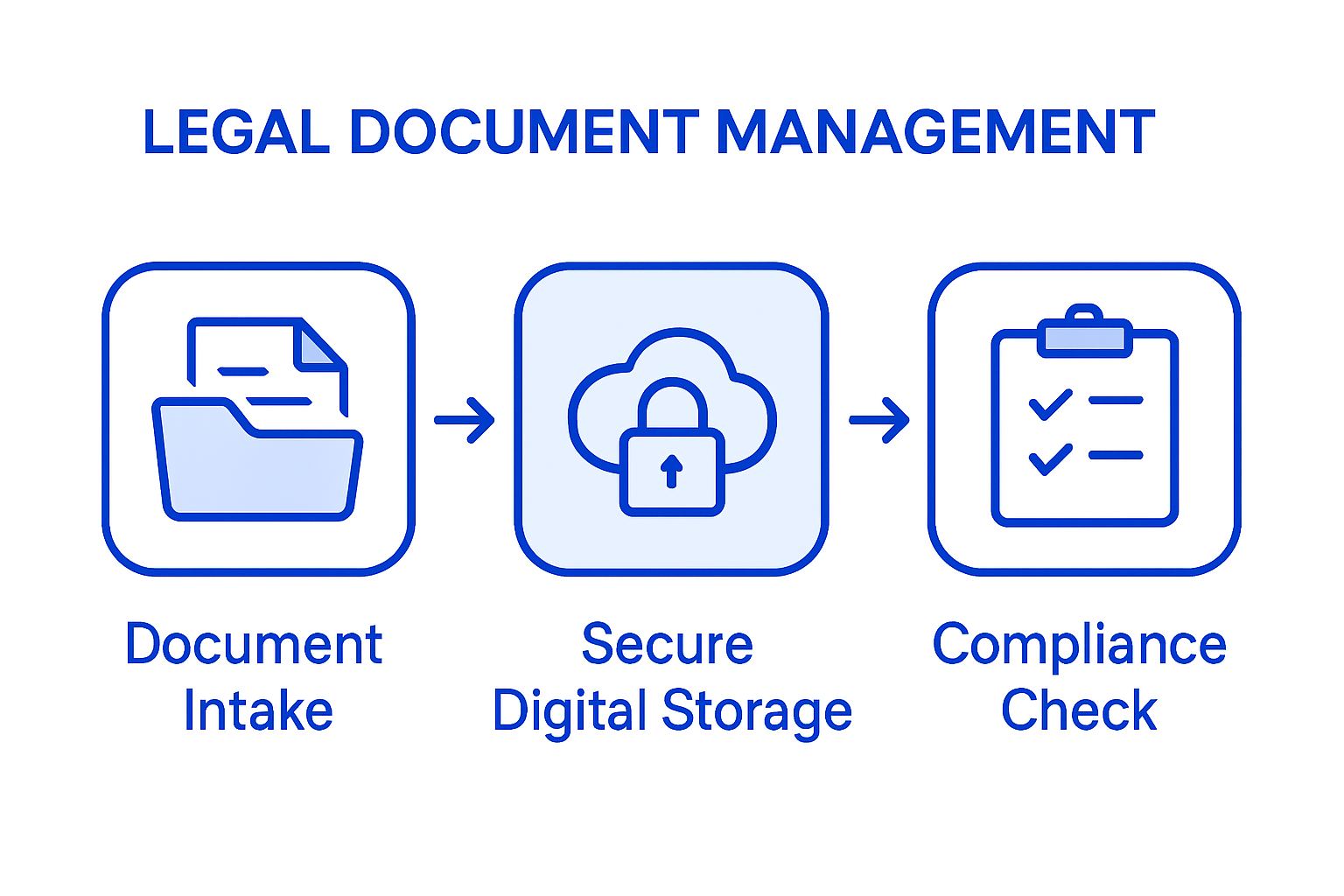
The core processes in legal document management typically encompass several critical stages. Document capture involves systematically collecting and digitizing physical and electronic documents, ensuring accurate metadata tagging and proper classification. Storage and retrieval processes focus on creating secure, organized digital repositories with advanced search capabilities that enable rapid access to critical information. Version control mechanisms track document modifications, maintaining comprehensive audit trails and preventing potential conflicts or unauthorized changes.
Key strategic processes in legal document management include:
- Intake and classification: Systematically categorizing incoming documents
- Digital preservation: Ensuring long-term document integrity and accessibility
- Access management: Implementing granular user permissions and security protocols
- Compliance tracking: Monitoring document lifecycles and regulatory requirements
- Automated workflow routing: Streamlining document approvals and review processes
Law firm management essentials underscore the importance of integrating these processes into a cohesive system. Successful implementation requires technological solutions that adapt to evolving legal landscapes, providing robust security, seamless collaboration, and comprehensive document lifecycle management. Professionals who master these processes can significantly enhance their operational efficiency and strategic capabilities.
Legal Compliance Requirements in the United States
Legal compliance represents a complex framework of regulatory obligations that businesses and organizations must navigate carefully. Guidelines for staying legally compliant provide critical insights into the multifaceted requirements that govern business operations across various sectors. Understanding these requirements is essential for mitigating legal risks and maintaining ethical business practices.
The United States legal compliance landscape encompasses multiple layers of regulatory oversight. Federal regulations mandate specific requirements across different domains, including labor standards, financial reporting, data protection, and industry-specific guidelines. State-level compliance introduces additional complexity, with varying regulations that can differ significantly from federal mandates. Key areas of focus include employment practices, tax reporting, licensing requirements, and sector-specific regulatory frameworks.
Critical components of legal compliance in the United States include:
- Federal and state registration requirements
- Employment law adherence
- Tax and financial reporting obligations
- Industry-specific regulatory standards
- Data privacy and protection protocols
- Workplace safety regulations
- Intellectual property protection
Labor law compliance standards underscore the importance of proactive regulatory management. Organizations must develop comprehensive compliance strategies that include regular audits, staff training, and robust documentation processes. Successful compliance requires a dynamic approach that anticipates regulatory changes, implements preventative measures, and maintains transparent reporting mechanisms.
Risk Mitigation and Security Best Practices
Document security represents a critical cornerstone of legal information management, demanding comprehensive strategies to protect sensitive information from potential threats. Legal technology essentials provide sophisticated frameworks for implementing robust security protocols that safeguard confidential data across digital and physical environments. Understanding and implementing these practices is fundamental to maintaining client trust and organizational integrity.
Risk mitigation in legal document management requires a multifaceted approach that addresses technological, procedural, and human factors. Technological safeguards include advanced encryption methods, secure cloud storage solutions, and multi-factor authentication systems. Procedural controls involve establishing strict access protocols, implementing comprehensive audit trails, and developing clear guidelines for document handling and information sharing. Human factor management focuses on training staff in cybersecurity awareness, creating a culture of security consciousness, and establishing clear accountability mechanisms.
Key risk mitigation and security strategies include:
- Encryption for data at rest and in transit
- Access control with granular user permissions
- Regular security audits and vulnerability assessments
- Comprehensive backup and disaster recovery planning
- Continuous staff training and awareness programs
- Secure document destruction protocols
- Multi-factor authentication systems
Law firm management best practices emphasize the importance of creating a holistic security approach. Organizations must develop adaptive security frameworks that evolve with emerging technological threats, balancing robust protection with operational efficiency. Successful risk mitigation requires ongoing commitment, continuous education, and proactive technological investments.
Streamline Your Legal Document Management with YM Doc Services
Managing critical legal documents can be overwhelming with the need for secure storage, precise compliance, and timely processing. The article highlights challenges like ensuring legal compliance, maintaining document security, and reducing administrative bottlenecks. If you are seeking reliable support to meet these demands, YM Doc Services specializes in efficient process serving, document retrieval, and court filings that align with the essentials of legal document management discussed.
Experience peace of mind by partnering with a professional service that values timeliness, reliability, and strict adherence to legal standards. Visit YM Doc Services today to simplify your workflow, reduce risks, and focus on what matters most. Learn more about how our comprehensive legal document solutions support law firm management essentials and legal technology essentials to elevate your practice. Take the next step toward hassle-free legal document handling now.
Frequently Asked Questions
What are the key components of legal document management?
Effective legal document management includes comprehensive digital storage systems, robust security mechanisms, version control protocols, and advanced search capabilities to ensure efficient organization and retrieval of documents.
How can legal professionals ensure compliance when managing documents?
Legal professionals can ensure compliance by implementing systems that accommodate various document types, maintain an auditable trail of interactions, and incorporate compliance tracking and monitoring systems.
What types of legal documents require precise management?
Common types of legal documents include contracts, wills, deeds, and court filings, each requiring specific attention to detail and adherence to legal drafting principles.
What practices enhance document security in legal management?
Best practices for enhancing document security include using encryption for data, establishing strict access controls, conducting regular security audits, and providing ongoing staff training on cybersecurity awareness.
Recommended
- Legal Document Organization Workflow: Streamline Your Process – YM Doc Services
- Master Legal Document Workflow 2025 for Fast, Compliant Delivery – YM Doc Services
- 7 Essential Legal Paperwork Tips for Smooth Processing – YM Doc Services
- Why Track Legal Documents – Safeguarding Compliance and Value – YM Doc Services
- Understanding the Importance of Technical Documentation – My WordPress
- Confidential Document Shredding Process for UK Businesses 2025 – Venture Waste
We provide GPS-stamped, court-compliant service of process throughout Orange County, Seminole County, and West Volusia County. Licensed Florida process server — FAPPS Member · NAPPS Member · Florida Statutes Chapter 48 Compliant.