
Most American law firms handle thousands of legal documents every year, yet even a single filing error can jeopardize an entire case. Staying organized is not just a formality for American legal professionals. With strict compliance rules and evolving technology, understanding document filing protocols directly impacts efficiency and risk management. This overview breaks down the essentials so you can avoid costly mistakes and keep your legal paperwork protected and accessible.
Table of Contents
- What Are Document Filing Protocols?
- Types Of Legal Document Filings Explained
- Step-By-Step Process For Court Filings
- Legal Requirements And Compliance Standards
- Common Pitfalls And How To Avoid Them
Key Takeaways
| Point | Details |
|---|---|
| Document Filing Protocols | Structured approaches ensure accurate organization and compliance of legal documents, protecting sensitive information. |
| Types of Legal Filings | Understanding different categories of filings is essential to navigate legal requirements effectively. |
| Court Filing Process | A step-by-step method is crucial for the accurate submission of legal documents to avoid common mistakes and ensure compliance. |
| Legal Compliance Standards | Robust compliance measures protect organizational integrity and security, especially in the evolving digital landscape. |
What Are Document Filing Protocols?
Document filing protocols represent a structured approach to organizing, storing, and managing legal paperwork with precision and compliance. These systematic procedures ensure that critical documents are processed, tracked, and maintained according to specific legal and administrative standards. At their core, document filing protocols establish a comprehensive framework for handling sensitive legal information across various organizational contexts.
Legal professionals rely on standardized document templates that provide consistent guidelines for drafting and filing critical paperwork. These protocols typically encompass several key elements:
- Accurate document classification
- Standardized naming conventions
- Secure digital and physical storage systems
- Compliance with regulatory requirements
- Systematic record retention and management
The emergence of digital technologies has dramatically transformed document filing protocols. Federal regulations like the Government Paperwork Elimination Act now mandate electronic filing methods that prioritize efficiency and security. Modern protocols leverage advanced technologies to streamline document management, reducing human error and improving overall information accessibility.
Effective document filing protocols are not merely administrative tasks but critical legal safeguards. They protect organizational integrity, ensure regulatory compliance, and create transparent audit trails that can withstand legal scrutiny. By implementing robust filing systems, legal professionals can minimize risks, optimize workflow efficiency, and maintain the highest standards of professional documentation management.
Types Of Legal Document Filings Explained
Legal document filings represent a diverse landscape of critical paperwork essential for maintaining legal processes and organizational records. Different types of filings serve unique purposes, ranging from court submissions to administrative documentation. Understanding these variations helps legal professionals and individuals navigate complex regulatory requirements with precision and confidence.
Some primary categories of legal document filings include:
- Court Filings: Legal documents submitted directly to judicial systems
- Administrative Filings: Documents processed through government agencies
- Corporate Filings: Regulatory submissions for business entities
- Personal Legal Filings: Individual documentation for various legal purposes
Certain specialized filings require unique handling, such as documents filed under seal, which protect sensitive information from public disclosure. These specialized submissions allow courts and legal entities to manage confidential materials while maintaining procedural integrity. Record sealing represents another nuanced filing approach, enabling restricted access to specific documents to protect privacy and legal interests.

Legal professionals often utilize comprehensive document templates to streamline various filing processes. These templates ensure consistency, reduce errors, and help maintain compliance across different types of legal submissions. By understanding the specific requirements and protocols for each document type, individuals and organizations can effectively manage their legal paperwork, mitigate potential risks, and ensure smooth administrative processes.
Step-By-Step Process For Court Filings
Navigating the court filing process requires meticulous attention to detail and a systematic approach to ensure legal documents are submitted correctly and efficiently. Court filings represent complex procedural requirements that demand precision and strict adherence to judicial guidelines. Understanding the step-by-step process is crucial for legal professionals and individuals seeking to submit documents through the court system.
The comprehensive process for court filings typically involves the following key steps:
-
Document Preparation
- Gather all necessary supporting documentation
- Verify document accuracy and completeness
- Ensure compliance with specific court formatting requirements
-
Case Information Verification
- Confirm correct case number
- Validate appropriate court jurisdiction
- Check filing deadlines
-
Electronic or Physical Submission
- Select appropriate filing method
- Pay required filing fees
- Obtain confirmation of submission
Legal professionals must be particularly cautious about common filing mistakes, which can significantly impact case proceedings. Critical errors such as incorrect case numbers, missing signatures, or filing in the wrong division can lead to document rejection and potential legal complications.
Court document preparation workflows have become increasingly sophisticated, incorporating digital technologies to streamline the submission process. By understanding each step and maintaining meticulous attention to detail, legal professionals can ensure their court filings are processed efficiently, minimizing potential delays and maintaining procedural integrity. Successful court filings require a combination of technical knowledge, procedural understanding, and careful execution.
Legal Requirements And Compliance Standards
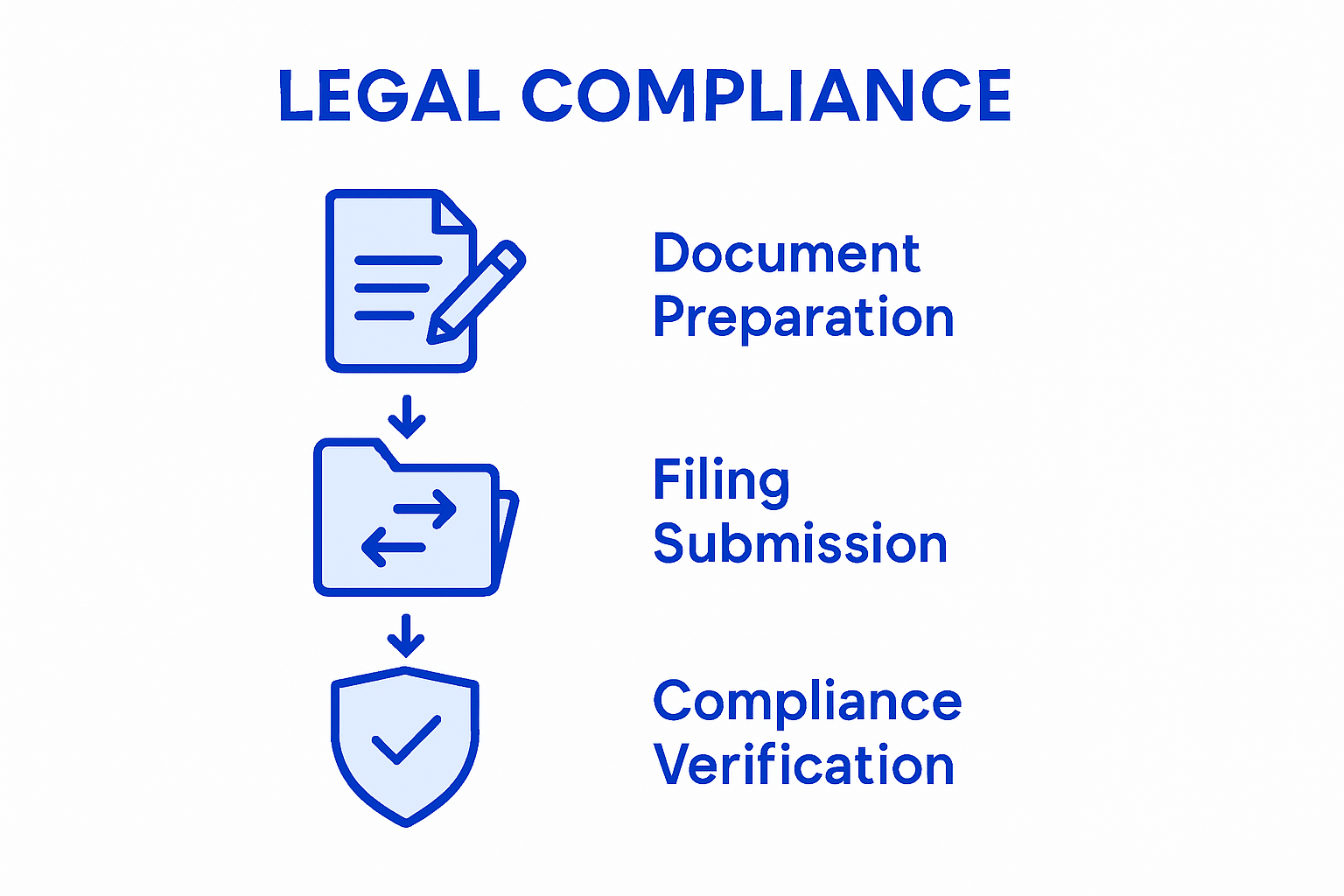
Legal requirements and compliance standards represent a critical framework that governs document management, ensuring organizations maintain integrity, security, and regulatory adherence. Compliance standards are not merely bureaucratic checklists but essential protections that safeguard sensitive information, protect organizational interests, and maintain legal accountability across various industries and jurisdictions.
Key elements of legal compliance in document management include:
- Maintaining document confidentiality
- Implementing secure storage protocols
- Establishing clear audit trails
- Ensuring data privacy and protection
- Adhering to industry-specific regulatory requirements
Digital documentation strategies have transformed how organizations approach legal compliance, introducing sophisticated technologies that enhance document security and regulatory adherence. Modern legal professionals must navigate increasingly complex digital landscapes while maintaining rigorous compliance standards.
Emergent technologies are revolutionizing compliance management, with innovative solutions like blockchain-based legal record systems offering unprecedented levels of security and transparency. Legal document preparation workflows now integrate advanced technologies that automatically validate compliance requirements, reducing human error and ensuring consistent adherence to regulatory standards. The future of legal compliance lies in seamlessly combining technological innovation with meticulous procedural standards, creating robust systems that protect organizational and individual interests.
Common Pitfalls And How To Avoid Them
Document filing processes are fraught with potential errors that can derail legal proceedings and compromise organizational efficiency. Legal document management demands precision and careful attention to detail, with even minor mistakes potentially resulting in significant consequences. Understanding and anticipating these common pitfalls is crucial for legal professionals and individuals navigating complex documentation requirements.
The most frequent document filing challenges include:
- Incorrect court or jurisdiction selection
- Incomplete or inaccurate form submissions
- Missing critical supporting documentation
- Overlooking filing deadlines
- Improper document formatting
- Insufficient or incorrect case identification
Court filing mistakes can be particularly devastating, with potential consequences ranging from document rejection to potential legal complications. The Middle District of Florida highlights several critical areas where professionals frequently encounter challenges, emphasizing the need for meticulous preparation and verification.
Trial court documentation processes require systematic approaches to minimize errors. Legal document preparation workflows have evolved to incorporate comprehensive checklists and verification mechanisms that help professionals navigate these potential pitfalls. By implementing rigorous review processes, maintaining detailed documentation, and staying current with procedural requirements, legal professionals can significantly reduce the risk of filing errors and ensure smooth, compliant document submissions.
Simplify Your Document Filing with Trusted Legal Support
Navigating complex document filing protocols and maintaining strict legal compliance can feel overwhelming. Whether you are facing challenges such as court filing mistakes, regulatory demands, or tight deadlines, reliable support can make all the difference. YM Doc Services understands the critical need for accurate document classification, timely submissions, and secure handling to prevent costly errors and delays.
Take control of your legal document workflow today by partnering with YM Doc Services. Our professional team offers efficient court filings, document retrieval, and comprehensive support tailored to your unique needs. Enjoy peace of mind knowing your filings meet rigorous compliance standards and are executed with precision. Visit https://ymdocservices.com to explore how we streamline your filing processes and reduce stress so you can focus on winning your cases.
Learn more about our structured Legal Document Preparation Workflows and comprehensive solutions designed to help you avoid common pitfalls and ensure success. Ready to elevate your document filing? Contact us now to experience trusted, timely, and professional service.
Frequently Asked Questions
What are document filing protocols?
Document filing protocols are structured procedures for organizing, storing, and managing legal paperwork, ensuring compliance with legal and administrative standards.
How has technology impacted document filing protocols?
Technology has transformed document filing protocols by enabling electronic filing methods and improving document management through enhanced security and efficiency.
What are the common types of legal document filings?
Common types of legal document filings include court filings, administrative filings, corporate filings, and personal legal filings, each serving distinct purposes within legal processes.
What are common pitfalls in document filing?
Common pitfalls in document filing include incorrect court or jurisdiction selection, incomplete submissions, missing supporting documents, and overlooking filing deadlines. Avoiding these mistakes is crucial for successful legal processes.
Recommended
- 7 Essential Legal Paperwork Tips for Smooth Processing – YM Doc Services
- Master Legal Document Workflow 2025 for Fast, Compliant Delivery – YM Doc Services
- Legal Paperwork Basics: Everything You Need to Know – YM Doc Services
- Legal Document Organization Workflow: Streamline Your Process – YM Doc Services
- Confidential Document Shredding Process for UK Businesses 2025 – Venture Waste
- Workflow gestione documentale salute sicurezza efficace – Sikuro

