
Over 60 percent of small businesses face compliance issues due to incomplete or missing legal paperwork. The paperwork behind the scenes can define how securely your business operates and whether it stays on the right side of the law. Understanding the must-have legal documents, proper record keeping, and common pitfalls can guard your company’s future and help you avoid costly penalties.
Table of Contents
- Defining Small Business Legal Paperwork
- Key Legal Documents for U.S. Businesses
- Compliance Requirements and Filing Processes
- Maintaining Records and Document Management
- Risks, Penalties, and Common Mistakes
Key Takeaways
| Point | Details |
|---|---|
| Essential Legal Paperwork | Small businesses must manage critical legal documentation including registrations, tax IDs, licenses, and contracts for compliance and operational legitimacy. |
| Compliance Requirements | Businesses must adhere to regulatory demands like tax reporting, license renewals, and accurate employee documentation to avoid penalties. |
| Document Management Strategies | Implementing digital archiving, retention schedules, and robust security ensures efficient document management and compliance. |
| Proactive Risk Management | Business owners should develop systematic approaches to maintain legal documents to prevent costly legal issues and ensure sustainable growth. |
Defining Small Business Legal Paperwork
Legal paperwork represents the foundational documentation that establishes and protects a small business’s operational and regulatory framework. According to the U.S. Small Business Administration, small business legal paperwork encompasses critical documents that formally recognize and structure a business entity.
Small business legal paperwork typically includes several key categories of documentation essential for legal compliance and operational legitimacy:
- Business Registration Documents: Formal paperwork establishing your business’s legal structure
- Tax Identification Paperwork: Federal and state documents for tax reporting
- Licensing and Permit Documentation: Required authorizations for specific business activities
- Contractual Agreements: Legal forms defining business relationships and obligations
The process of managing legal paperwork involves more than just filing documents. As outlined by the Commerce Research Library, these documents serve multiple critical functions, including protecting business owners, defining organizational structure, and ensuring compliance with local, state, and federal regulations.
Navigating the complex landscape of legal documentation requires careful attention to detail and understanding of specific requirements for your business type. For small business owners, investing time in properly preparing and maintaining these documents can prevent potential legal challenges and provide a solid foundation for future growth. Learn more in our comprehensive legal documentation tips guide.
Key Legal Documents for U.S. Businesses
Navigating the legal landscape of business documentation requires a strategic understanding of essential paperwork. According to the U.S. Small Business Administration, several critical legal documents form the backbone of establishing and operating a business in the United States.
Key legal documents for U.S. businesses typically include:
- Articles of Incorporation: Formal document establishing a corporation’s legal existence
- Operating Agreements: Internal documents defining business ownership and operational structure
- Employer Identification Number (EIN): Federal tax identification for businesses
- Business Licenses: Required permits for legal operation in specific industries
- Partnership Agreements: Contracts defining relationships between business partners
The process of preparing these documents goes beyond simple paperwork. Each document serves a specific purpose in protecting the business, defining its legal structure, and ensuring compliance with federal and state regulations. Careful preparation and maintenance of these documents can prevent potential legal challenges and provide a clear framework for business operations.

Business owners must approach legal documentation with precision and attention to detail. Our comprehensive guide on legal document types can help you understand the nuanced requirements for different business structures and industries. Remember, the right documentation is not just a legal requirement but a strategic tool for long-term business success.
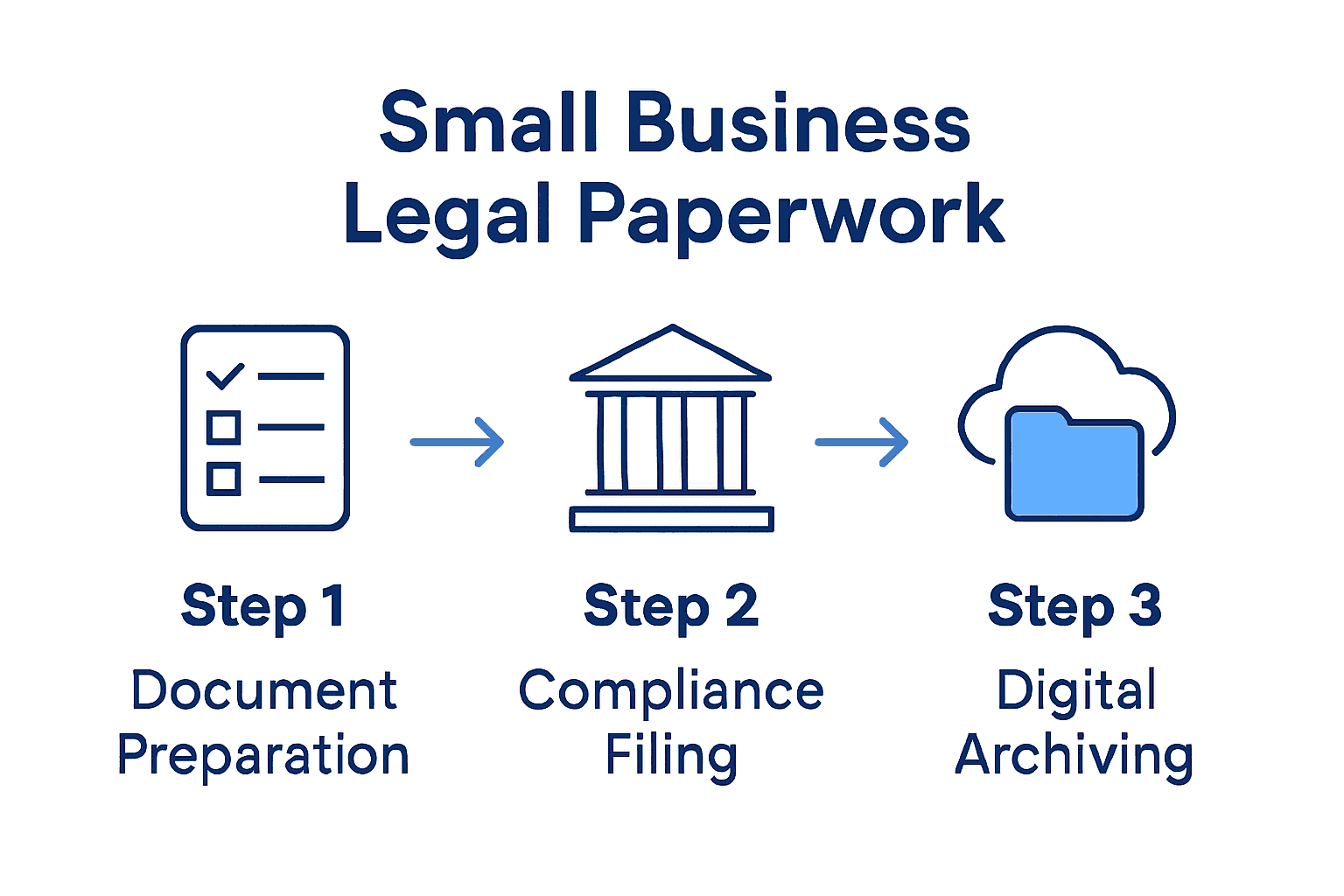
Compliance Requirements and Filing Processes
Navigating the complex world of business compliance requires a strategic and methodical approach. According to the U.S. Small Business Administration, small businesses must carefully manage their legal obligations through systematic filing processes and adherence to regulatory requirements.
Compliance requirements for businesses typically involve several critical components:
- Tax Reporting: Timely and accurate federal and state tax submissions
- License Renewals: Maintaining current professional and operational permits
- Regulatory Filings: Documenting changes in business structure or ownership
- Annual Reports: Providing updates on business financial and operational status
- Employee Documentation: Maintaining accurate records for workforce management
The filing process extends beyond mere paperwork submission. Each document serves as a critical communication channel between the business and government regulatory bodies. Precise documentation demonstrates a commitment to transparency and legal accountability. Our step-by-step guide on legal process filing can help businesses navigate these complex requirements with confidence.
Business owners must remain proactive in understanding evolving compliance landscapes. By developing robust systems for tracking and managing legal documentation, companies can minimize risks, avoid potential penalties, and create a solid foundation for sustainable growth. Attention to detail and consistent follow-through are the cornerstones of effective regulatory compliance.
Maintaining Records and Document Management
Effective document management is the backbone of organizational efficiency and legal compliance. According to the Commerce Research Library, proper record-keeping is not just a bureaucratic requirement but a critical strategic process for businesses of all sizes.
Document management involves several key strategies:
- Digital Archiving: Creating secure electronic repositories for critical documents
- Retention Scheduling: Establishing clear timelines for document preservation and disposal
- Access Control: Implementing robust security protocols for sensitive information
- Backup Systems: Developing redundant storage solutions to prevent data loss
- Compliance Tracking: Monitoring document lifecycles against regulatory requirements
The complexity of record management extends far beyond simple file storage. Modern businesses must balance accessibility with security, ensuring that important documents remain protected yet readily retrievable when needed. Our guide on legal document organization workflow can help businesses develop comprehensive strategies for managing their critical paperwork.
Technology has transformed document management, offering sophisticated tools that enable businesses to streamline their record-keeping processes. From cloud-based storage solutions to advanced document indexing systems, companies now have unprecedented capabilities to manage their legal and operational documentation with precision and efficiency.
Risks, Penalties, and Common Mistakes
Legal compliance is a minefield that can quickly become costly for unprepared businesses. According to the U.S. Small Business Administration, organizations frequently encounter significant risks when they fail to manage their legal documentation and regulatory requirements effectively.
Common legal mistakes that businesses often make include:
- Incomplete Record Keeping: Failing to maintain comprehensive documentation
- Missed Filing Deadlines: Overlooking critical submission dates for regulatory documents
- Incorrect Business Classification: Misrepresenting business structure on official forms
- Inadequate Tax Documentation: Poor tracking of financial transactions and expenses
- Neglecting Permit Renewals: Allowing critical operational licenses to expire
The financial and legal consequences of these errors can be devastating. Penalties can range from modest fines to substantial financial sanctions, and in extreme cases, complete business dissolution. Our guide on essential legal paperwork tips offers practical strategies to help businesses avoid these costly pitfalls.
Proactive risk management is the key to preventing legal complications. Business owners must develop a systematic approach to tracking, maintaining, and updating their legal documentation. By implementing robust compliance strategies and maintaining meticulous records, companies can protect themselves from potential regulatory challenges and focus on sustainable growth.
Simplify Your Small Business Legal Paperwork with Expert Support
Managing small business legal paperwork can feel overwhelming. From maintaining accurate records to meeting strict compliance deadlines and submitting complex filings, the risk of costly mistakes is real and stressful. You are not alone in facing challenges like incomplete documentation or missed permit renewals that can threaten your business’s future.
YM Doc Services understands these pain points and offers a reliable solution to ease your burden. Whether you need help with process serving, court filings, or document retrieval, our professional services are designed to save you time and reduce risk. By partnering with us, you gain a trusted ally committed to accuracy, timeliness, and compliance with legal standards. Visit our main page to learn how we can streamline your legal paperwork management.

Take control of your business’s legal documentation now. Don’t wait for deadlines or compliance issues to catch you off guard. Explore the seamless support available at YM Doc Services, and find clear, stress-free solutions tailored to the unique demands of small business legal paperwork. For detailed guidance on legal document preparation check out our tips on legal documentation and learn about the filing process explained. Act today to safeguard your business future.
Frequently Asked Questions
What is small business legal paperwork?
Legal paperwork for small businesses includes essential documents that establish and protect the business’s operational and regulatory framework, such as registration documents, tax identification paperwork, licenses, permits, and contractual agreements.
Why is document management important for small businesses?
Effective document management ensures organizational efficiency and legal compliance, helping to maintain critical records, protect sensitive information, and streamline access to necessary documents when needed.
What are the risks of not maintaining proper legal documentation?
Failing to manage legal documentation can lead to significant risks, including incomplete records, missed filing deadlines, incorrect business classifications, inadequate tax documentation, and expired permits, which can result in financial penalties and legal complications.
How can small businesses improve their compliance with legal paperwork requirements?
Small businesses can enhance compliance by developing a systematic approach to track, maintain, and update legal documents, implementing rigorous filing processes, and utilizing tools for digital archiving and compliance tracking.
Recommended
- Legal Paperwork Basics: Everything You Need to Know – YM Doc Services
- Legal Paperwork for Real Estate: Complete Guide – YM Doc Services
- 7 Essential Legal Paperwork Tips for Smooth Processing – YM Doc Services
- Process Serving for Businesses: Step-by-Step Guide to Compliance – YM Doc Services
We provide GPS-stamped, court-compliant service of process throughout Orange County, Seminole County, and West Volusia County. Licensed Florida process server — FAPPS Member · NAPPS Member · Florida Statutes Chapter 48 Compliant.