

Divorce cases are complicated enough without paperwork adding to the stress. Process servers handle over 2 million legal documents every year in the US just to make sure everyone gets official notice. Most people think their job is all about knocking on doors and handing out envelopes, but what actually happens behind the scenes is far more strategic and critical to your legal rights than anyone expects.
Table of Contents
- What Are Process Servers And Their Functions?
- The Importance Of Proper Document Delivery In Divorce
- Legal Implications Of Service Of Process In Divorce Cases
- Challenges Faced By Process Servers In Divorce Situations
- How Process Servers Facilitate Smooth Divorce Proceedings
Quick Summary
| Takeaway | Explanation |
|---|---|
| Process servers ensure legal notification | They deliver essential documents, confirming parties are informed about legal actions affecting them. |
| Adhering to legal protocols is crucial | Strict compliance with laws governing service protects the integrity of judicial proceedings and individual rights. |
| Proper delivery prevents legal complications | Accurate document service avoids delays, financial penalties, and potential invalidation of divorce proceedings. |
| Neutrality in delivery is key | Process servers act as unbiased intermediaries, minimizing emotional tensions and ensuring professional communication. |
| Document delivery must be documented | Official records of service attempts are vital for legal verification and can be critical in court cases. |
What Are Process Servers and Their Functions?
Process servers are legal professionals who play a critical role in the judicial system by delivering important legal documents to individuals involved in legal proceedings. These specialized individuals ensure that defendants and other parties are properly notified about legal actions, court summonses, subpoenas, and other significant legal communications.
The Legal Notification Professionals
In divorce cases, process servers serve as neutral third parties responsible for formally delivering divorce papers and related legal documents to the receiving party. Learn more about professional process serving to understand their crucial role in maintaining legal communication standards.
The primary responsibilities of process servers in divorce proceedings include:
- Locating the recipient of legal documents with precision and efficiency
- Personally delivering court documents to ensure legal notification
- Providing official proof of service through detailed documentation
- Maintaining legal compliance with jurisdictional notification requirements
Ensuring Legal Due Process
Process servers must adhere to strict legal protocols when delivering documents. They are required to:
- Follow specific state regulations regarding document service
- Maintain detailed records of service attempts
- Verify the identity of the recipient
- Document the exact time, date, and method of document delivery
According to National Association of Professional Process Servers, these professionals are essential in guaranteeing that individuals receive proper legal notice, which is a fundamental aspect of due process in the American legal system. Their work ensures that no party can claim ignorance of legal proceedings, thus protecting the rights of all individuals involved in legal disputes.
To clarify the specific responsibilities that process servers fulfill in divorce cases, the following table summarizes their core functions and required actions.
| Responsibility | Explanation |
|---|---|
| Locating the Recipient | Finding the correct individual efficiently and accurately |
| Personal Delivery | Handing legal documents directly to ensure formal notification |
| Providing Proof of Service | Supplying detailed documentation verifying successful delivery |
| Adhering to Legal Compliance | Following state-specific and jurisdictional laws regarding service |
| Maintaining Accurate Records | Logging time, date, method, and recipient identity for legal verification |
| Verifying Recipient Identity | Confirming the correct person receives the documents |
| Documenting Service Attempts | Reporting each attempt and any challenges faced during delivery |
The Importance of Proper Document Delivery in Divorce
In legal proceedings, especially divorce cases, proper document delivery is not just a procedural formality but a fundamental requirement that protects the rights of all parties involved. The manner and method of serving legal documents can significantly impact the entire legal process, potentially determining the outcome of divorce proceedings.
Legal Validity and Notification
Proper document delivery ensures that each party receives official notification about legal actions, creating a transparent and fair legal environment. Explore our legal courier services to understand the critical role of professional document delivery.
Key reasons why proper document delivery matters include:
- Establishing Legal Notice: Confirms that parties are officially informed about court proceedings
- Protecting Individual Rights: Prevents default judgments based on lack of notification
- Creating Documented Evidence: Generates legal proof of service for court records
- Preventing Procedural Challenges: Minimizes potential legal disputes about notification
Consequences of Improper Document Service
Improperly served divorce documents can lead to significant legal complications. Courts may invalidate proceedings if document service does not meet strict legal standards. This can result in:
The following table compares the consequences of proper versus improper document service in divorce cases to highlight their legal and practical impact.
| Factor | Proper Service | Improper Service |
|---|---|---|
| Legal Validity | Proceedings move forward as intended | Proceedings may be delayed, dismissed, or challenged |
| Notification of Parties | All parties are formally notified | Recipients may claim lack of notice |
| Judicial Compliance | Court requirements fully met | Failure to meet judicial standards |
| Proof of Service | Valid, court-admissible documentation is provided | May lead to contested or missing documentation |
| Potential Outcomes | Fair and efficient resolution | Additional expenses, stress, and legal complications |
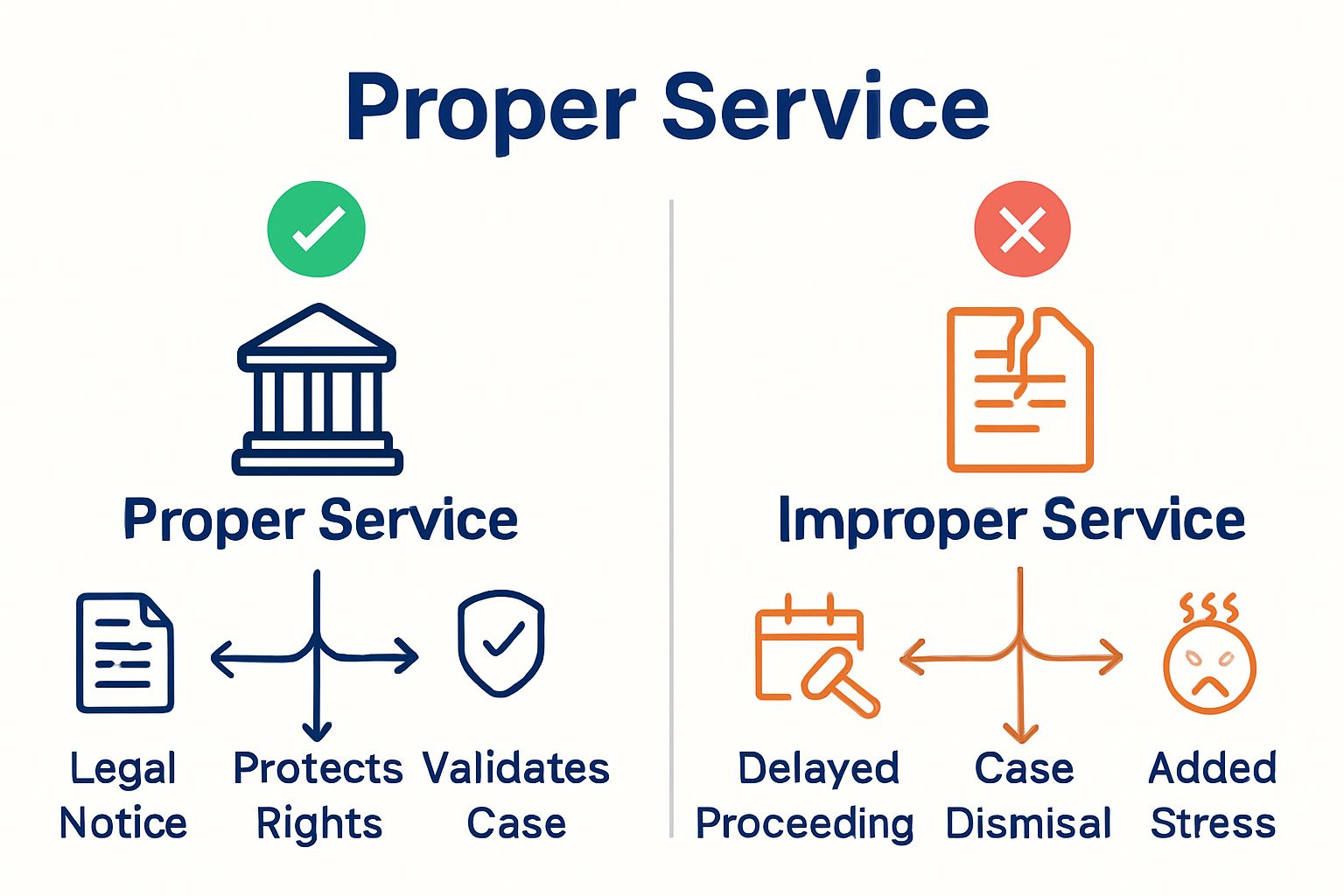
- Delayed divorce proceedings
- Additional legal expenses
- Potential case dismissal
- Extended emotional stress for all parties involved
According to National Center for State Courts, accurate and verifiable document delivery is crucial in maintaining the integrity of judicial processes. Professional process servers play a vital role in ensuring that legal notifications are conducted with precision, professionalism, and strict adherence to jurisdictional requirements, thereby safeguarding the fundamental principles of due process in divorce proceedings.
Legal Implications of Service of Process in Divorce Cases
The service of process represents a critical legal mechanism that establishes the foundation for legitimate judicial proceedings in divorce cases. By ensuring proper legal notification, this procedure safeguards constitutional rights and maintains the integrity of the judicial system.
Constitutional Right to Due Process
Learn more about our service of process expertise and understand the intricate legal requirements that govern document delivery. The service of process is fundamentally rooted in the constitutional guarantee of due process, which mandates that individuals receive formal notice of legal actions that could potentially impact their rights.
Key legal implications of service of process include:
- Establishing Jurisdictional Authority: Courts can only proceed with legal actions after confirming proper notification
- Protecting Individual Legal Rights: Ensures defendants have an opportunity to respond to legal claims
- Preventing Default Judgments: Provides clear mechanisms for legal participation
- Creating Legally Admissible Documentation: Generates official records of notification attempts
Consequences of Improper Service
Improper service of process can lead to significant legal complications. California Courts indicate that when service is not correctly executed, the entire legal proceeding may be considered invalid. This can result in:
- Automatic dismissal of divorce proceedings
- Potential financial penalties
- Required re-initiation of legal documentation
- Extended legal timelines and increased expenses
Professional process servers play a crucial role in navigating these complex legal requirements. They understand jurisdictional nuances, maintain detailed documentation, and ensure that all legal notifications meet stringent judicial standards. Their expertise helps prevent procedural errors that could compromise the entire divorce resolution process, ultimately protecting the legal rights of all parties involved.
Challenges Faced by Process Servers in Divorce Situations
Process servers encounter unique and complex challenges when delivering legal documents in divorce cases, requiring professional skills that extend far beyond simple document delivery. These professionals must navigate intricate personal dynamics, legal requirements, and potential confrontational scenarios while maintaining strict professional standards.
Emotional and Personal Dynamics
Explore our Florida process server expertise to understand the nuanced professional approach required in sensitive legal document delivery. Divorce proceedings inherently involve heightened emotional tensions, creating unpredictable environments where process servers must remain calm, objective, and strategically professional.
Key challenges in emotional scenarios include:
- Managing Potential Hostile Reactions: Dealing with unexpected emotional responses
- Maintaining Personal Safety: Protecting themselves during potentially volatile interactions
- Preserving Professional Neutrality: Avoiding engagement in personal conflicts
- Documenting Precise Service Details: Ensuring legal validity despite emotional complexity
Legal and Logistical Complexities
Successful service of process in divorce cases demands sophisticated tracking and location strategies. According to National Association of Professional Process Servers, process servers frequently encounter significant obstacles such as:
- Individuals intentionally avoiding document receipt
- Complex residential or workplace location challenges
- Multiple potential service locations
- Legal restrictions on acceptable service methods
Professional process servers must possess advanced investigative skills, understanding of legal jurisdictions, and the ability to adapt quickly to changing circumstances. Their work requires a delicate balance between persistent location efforts and strict adherence to legal protocols, ensuring that divorce documents are delivered accurately and legally, regardless of potential evasion tactics or emotional resistance.
How Process Servers Facilitate Smooth Divorce Proceedings
Process servers play a pivotal role in streamlining divorce proceedings by ensuring efficient, legal, and professional communication between parties. Their strategic interventions help minimize potential conflicts and expedite the legal resolution process, transforming what could be a complex and emotionally charged situation into a more manageable legal procedure.
Efficient Legal Communication
Discover our Florida process servers and understand how professional document delivery can significantly impact legal proceedings. Process servers act as neutral third-party intermediaries who bridge communication gaps, ensuring that all legal documents are delivered accurately and in compliance with jurisdictional requirements.
Key ways process servers facilitate smooth proceedings include:
- Reducing Direct Confrontational Interactions: Minimizing emotional tensions between divorcing parties
- Providing Verified Documentation: Creating official records of legal document delivery
- Ensuring Legal Compliance: Meeting strict judicial notification standards
- Expediting Legal Timelines: Preventing unnecessary delays in divorce proceedings
Strategic Document Management
Professional process servers employ sophisticated strategies to overcome potential challenges in document delivery. Cornell Law School emphasizes that precise and verifiable service of process is fundamental to maintaining the integrity of legal proceedings.
Their strategic approach involves:
- Identifying multiple potential service locations
- Understanding complex legal notification requirements
- Maintaining detailed and accurate service records
- Adapting to challenging delivery scenarios
By meticulously managing the document delivery process, process servers help create a structured and professional environment that supports the legal system’s objective of fair and transparent dispute resolution. Their expertise transforms potentially contentious interactions into methodical, legally compliant communication channels.
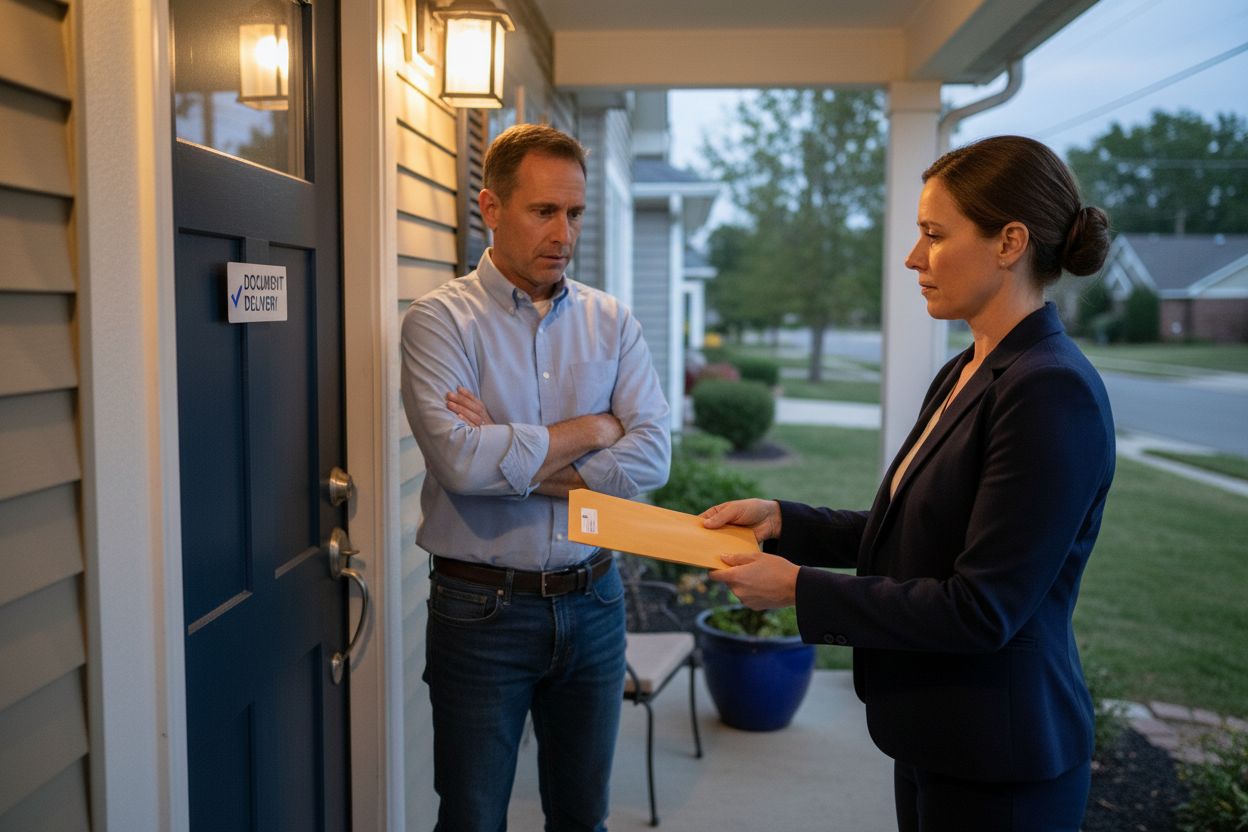
Take Control of Your Divorce Proceedings with Professional Process Serving
Navigating divorce is stressful enough without worrying about whether essential legal documents will be handled correctly. As highlighted in this article, improper service of process can cause delays, extra costs, or even ruin your case. You need the confidence that every document is served reliably, that every interaction meets strict legal standards, and that you have clear documentation when it matters most. Letting experts handle the service ensures smoother legal proceedings, reduces emotional strain, and protects your rights every step of the way.
Choose peace of mind and proven results by trusting YM Doc Services for your process serving needs. We are committed to speed, accuracy, and complete compliance—so your case stays on track. Our service of process expertise and legal courier solutions are just a click away. Visit our main site to start now and see how easy it can be to keep your divorce moving forward.
Frequently Asked Questions
What is the role of process servers in divorce proceedings?
Process servers are responsible for delivering important legal documents, such as divorce papers, to individuals involved in a divorce case. They ensure that recipients are properly notified, which is essential for maintaining legal compliance and protecting the rights of all parties.
How does a process server locate the recipient of divorce documents?
Process servers use various methods to locate the recipients, including gathering information from public records, social media, and even conducting surveillance if necessary. To facilitate effective service, individuals can provide any known addresses or contact information for the recipient.
What happens if the recipient avoids being served with divorce papers?
If the recipient intentionally avoids service, the process server may employ alternative delivery methods or seek court approval for substitute service. To resolve this issue efficiently, it’s important to communicate any known evasive behavior to the process server.
How can I ensure that the service of process is legally valid in my divorce case?
To ensure legal validity, work with a professional process server who understands the specific regulations in your jurisdiction regarding service of process. Providing accurate details about the recipient’s location and cooperating with the server’s efforts will help maintain compliance with legal standards.
What documentation will a process server provide after serving divorce papers?
A process server will provide an official proof of service document detailing the time, date, and method of delivery, as well as the identity of the recipient. Make sure to keep this documentation, as it may be required for court proceedings to prove that service was properly executed.
How can process servers help minimize conflicts during the divorce process?
By acting as neutral third-party intermediaries, process servers can deliver documents without direct confrontation, thus reducing emotional tensions between the parties. Engaging a process server allows for a more professional and structured approach to document delivery, which can help expedite the overall divorce process.
Recommended
- The Importance of Professional Process Serving in Legal Cases – YM Doc Services
- Florida Process Servers – YM Doc Services
- Process Server Florida – YM Doc Services
- Sanford – YM Doc Services
Article generated by BabyLoveGrowth
We provide GPS-stamped, court-compliant service of process throughout Orange County, Seminole County, and West Volusia County. Licensed Florida process server — FAPPS Member · NAPPS Member · Florida Statutes Chapter 48 Compliant.